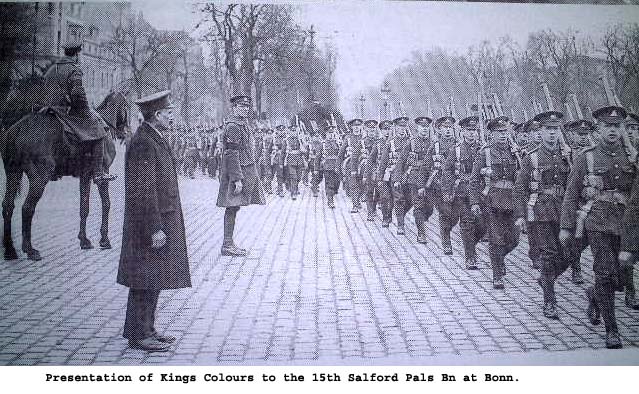
15th Service Bn
The XX Lancashire Fusiliers

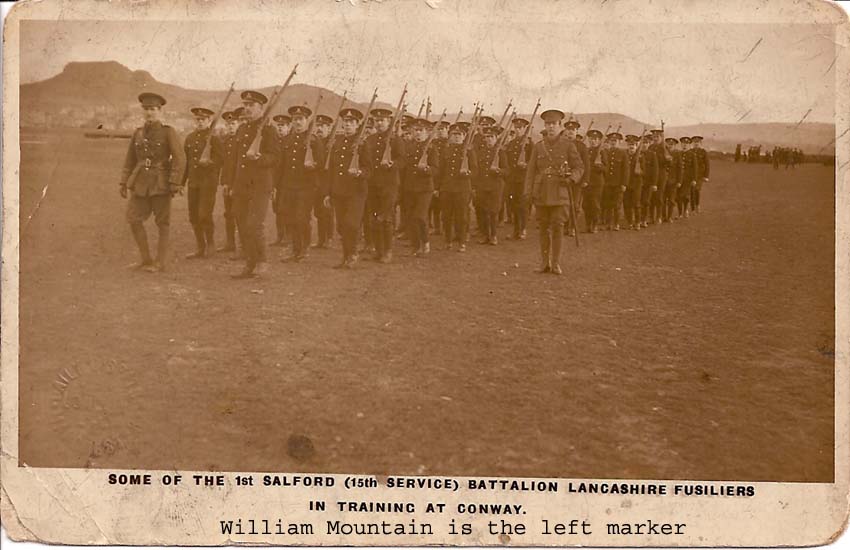
1st Salford Pals
1914 - 1918

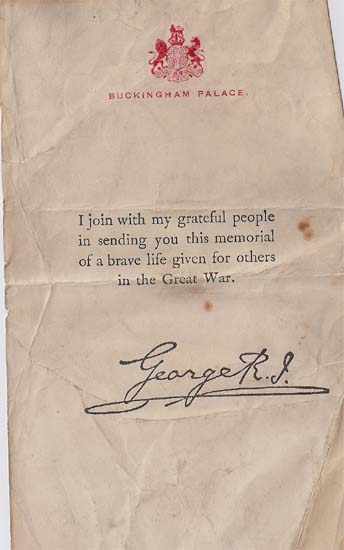
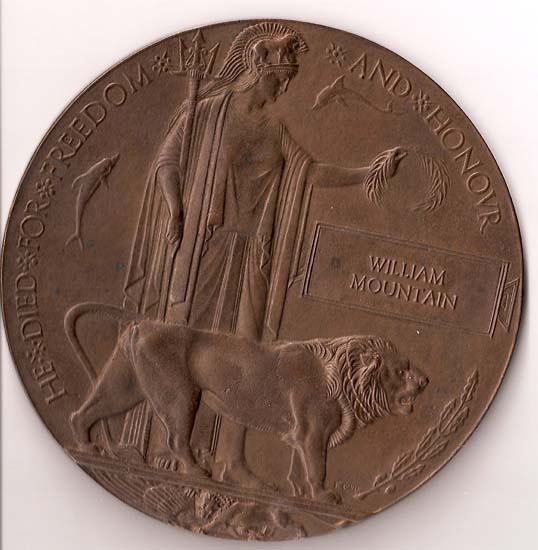
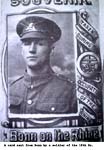
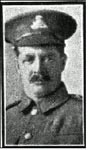
10671 Sgt William Mountain,
Lancashire Fusiliers, 15th Service Batt,
C Company.
Died 1st July 1916 day one of The Somme.

Sent in by grandaughter Tracey Binks

William Mountain

http://www.cwgc.org/search/casualty_details.aspx?casualty=526855


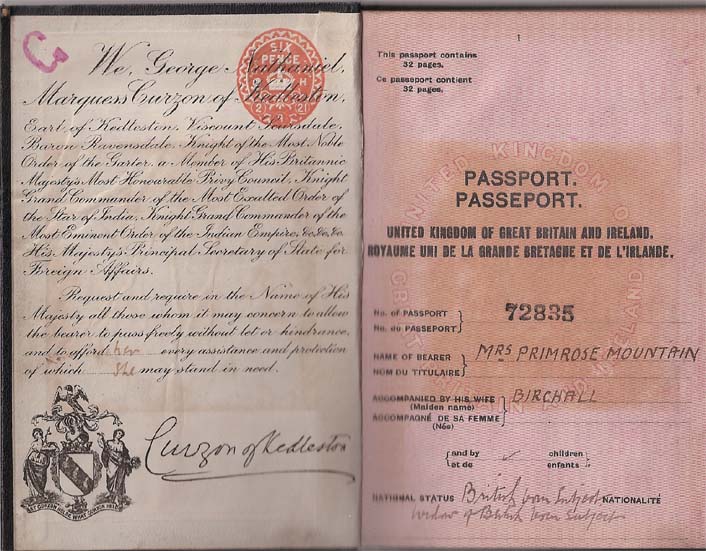
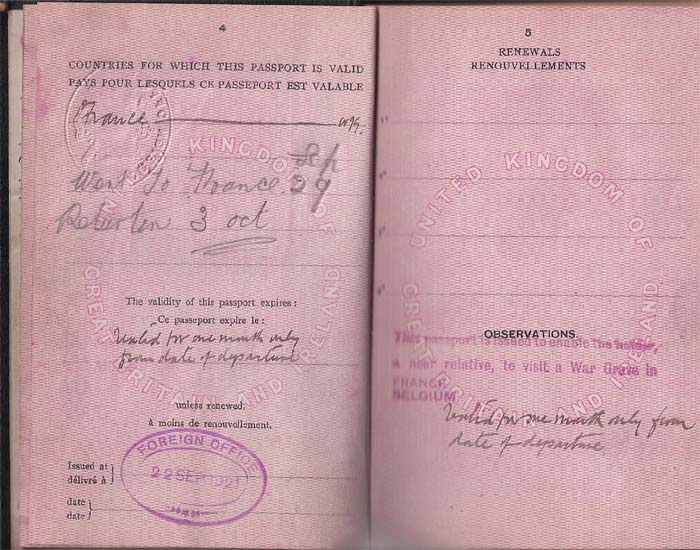
Primrose, Nora, William jnr. and Willam Mountain

The Mountain family had their roots in Flockton in Yorkshire.

William's parents were William and Ellen (nee Memory) and they moved around following his work as a stone mason.

They married in Leicester and had 4 children, William (our LF soldier) Herbert, Ernest, and Alice.

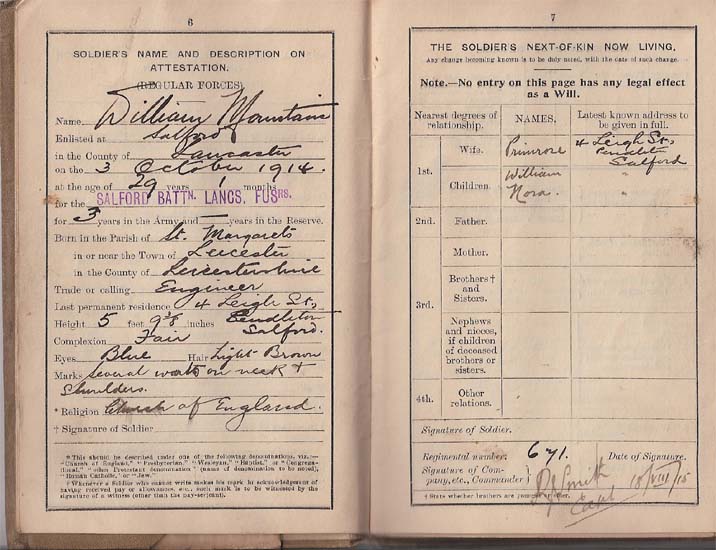
William grew up and married Primrose and lived at 4 Leigh Street Pendleton Salford.
They had 2 children, Nora and William.

He enlisted into the 15th LFs (Salford Pals) on the 3rd October 1914.


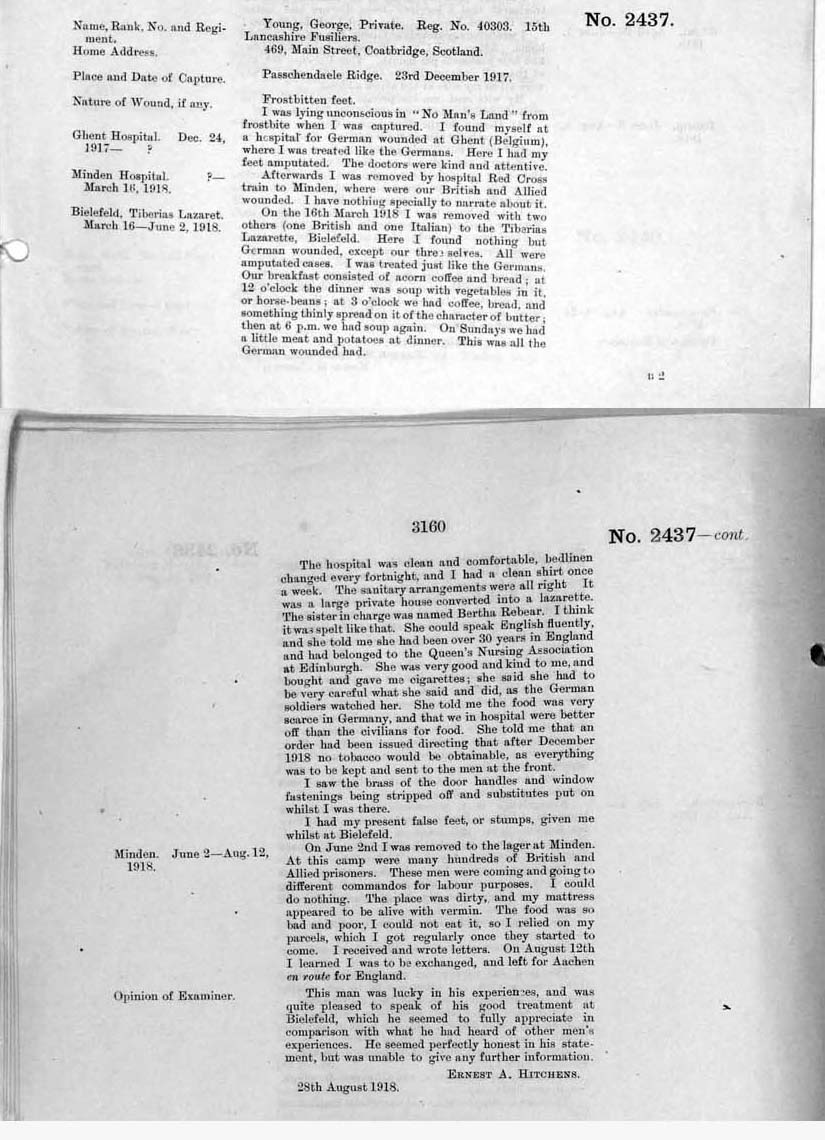
War Diaries of POWs

40303 Pte George Young
Captured Passchendacle Ridge
23rd December 1917
with Frostbitten Feet


+


From "The Long Long Trail" Website
http://www.1914-1918.net/sacredground/places.htm

The Somme
Authuille Village
1916
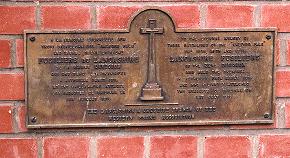
On the wall of the rebuilt church in this small village is a bronze plaque that reads "To the eternal memory of three battalions of the 'Salford Pals', the 15th, 16th and 19th Lancashire Fusiliers of 32nd Division, who held the trenches in Authuille from early 1916 and who valiantly attacked the redoubts of Thiepval on 1st July 1916". The plaque was erected by the Lancashire & Cheshire Branch of the Western Front Association.


These photos and more have been sent in by
Christine Kelly (nee Hall) granddaughter of Fus Hall for the full story
and more click on photo A1

A
B
C
D
1

Fus
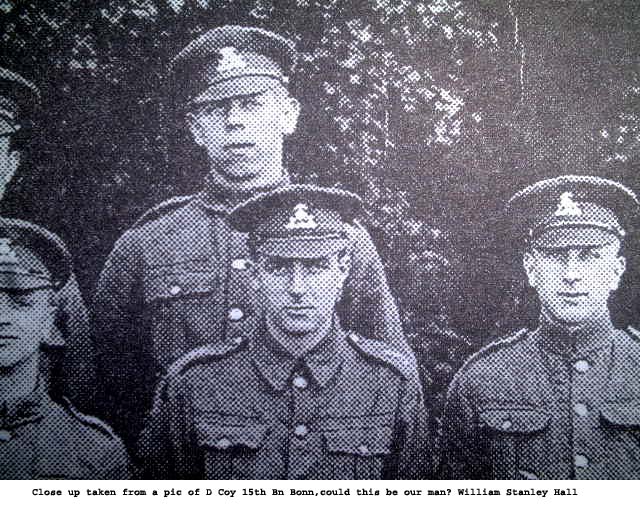
William Stanley Hall


2


A
B
C
D
1

William Roughly


yet another great
story
Click on photo to
see it


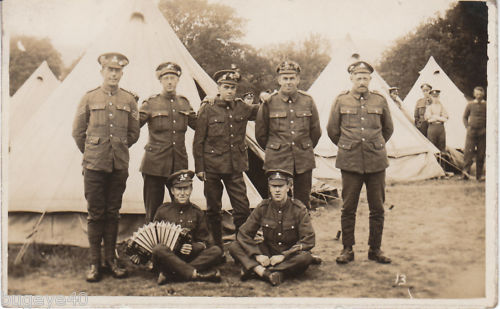
1st Salford Pals under canvas at Conway

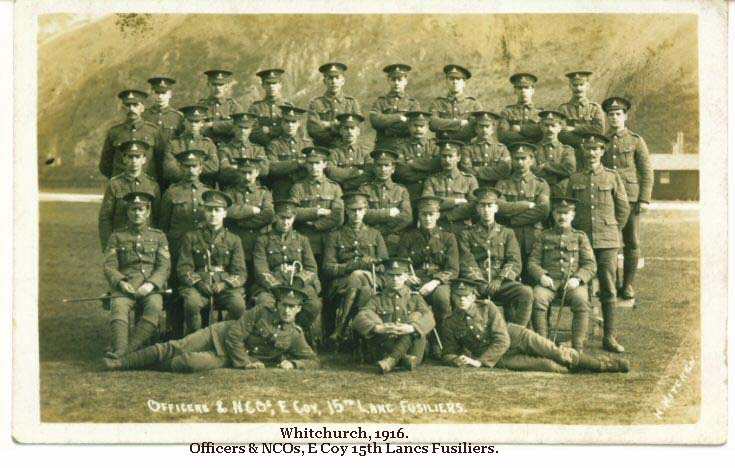
E Coy
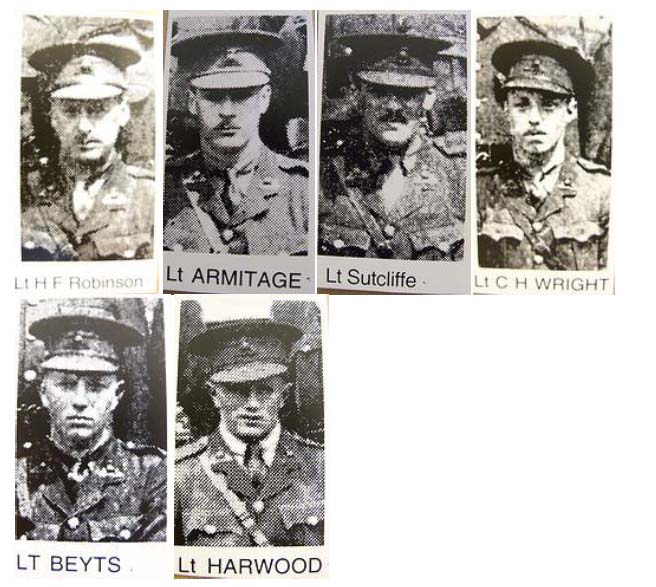
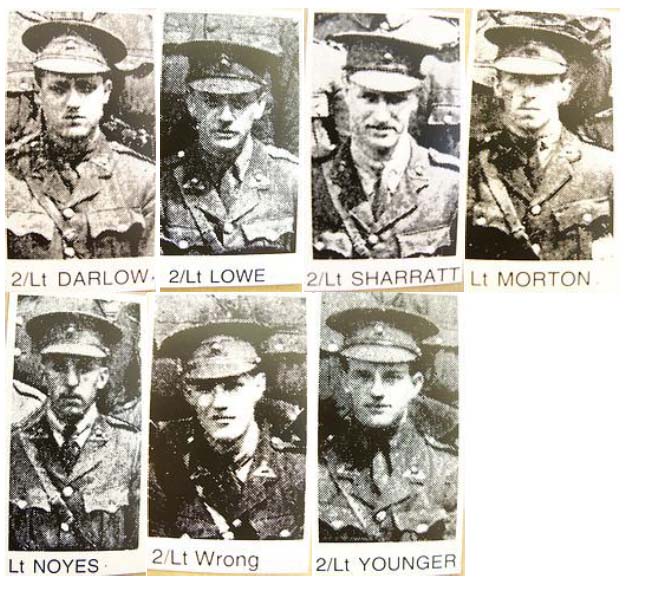
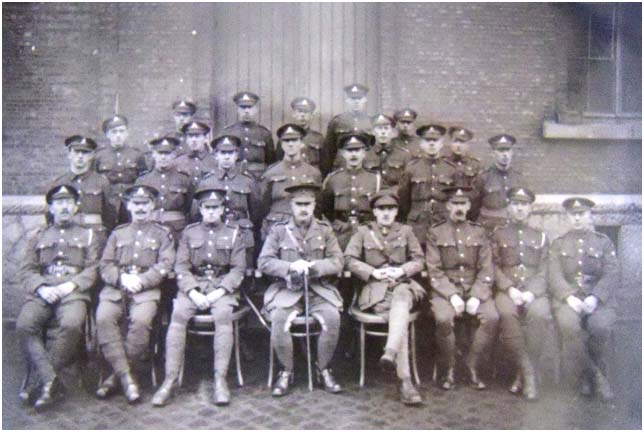
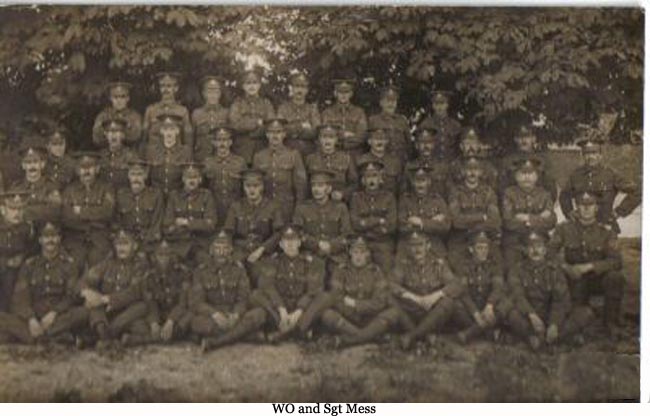
Officers and Ncos

2

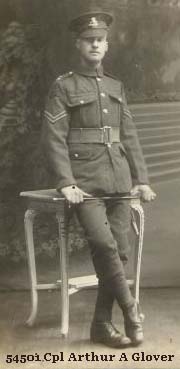
Cpl Arthur Glover
 
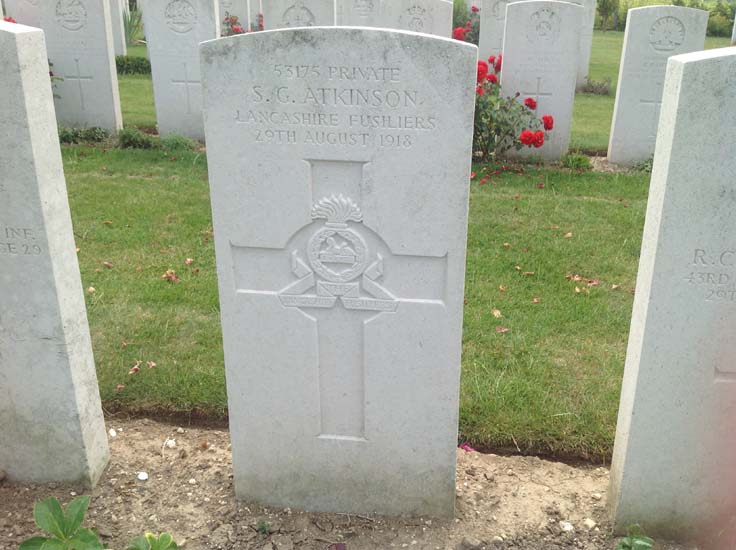
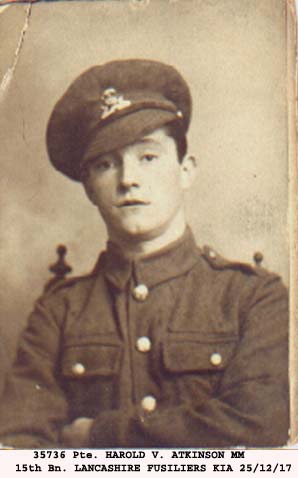
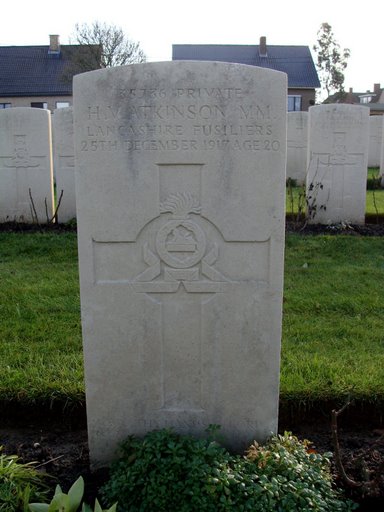
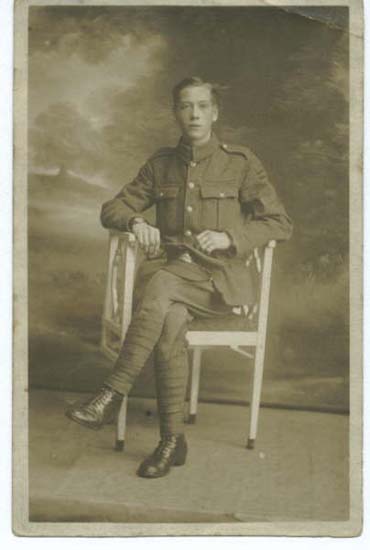
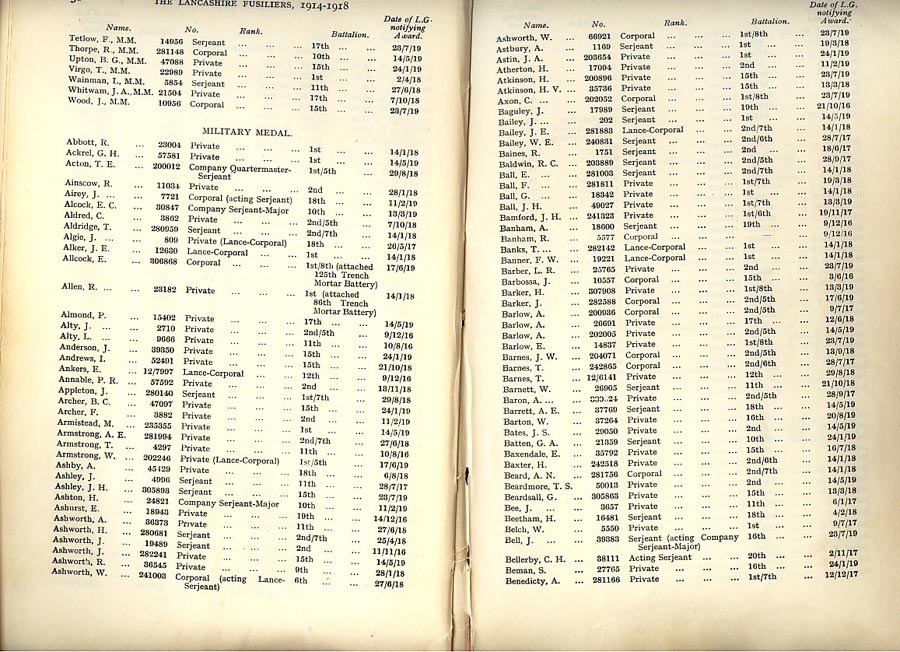
35736 Pte. HAROLD V. ATKINSON MM
KIA 25/12/17

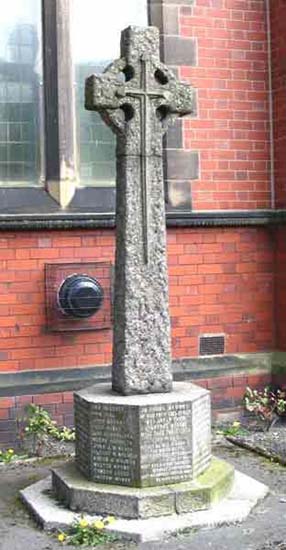
St Cuthberts War Memorial, Townley Street, Burnley
The London Gazette online archive:
Issue number: 30573 Page:322.

Description: His Majesty the King has been graciously pleased to approve of the award of the Military Medal for bravery in the Field to the undermentioned Non-commissioned Officers and Men:- 35736, Pte. H.V. Atkinson, Lanc. Fus. (Burnley).
http://www.lancs-fusiliers.co.uk/Honour&dec/14.jpg

http://www.inmemories.com/Cemeteries/duhallow.htm

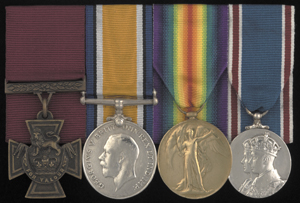
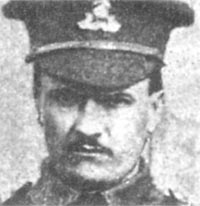
Sgt James Clarke V.C.
Birth: Apr. 6, 1894
Death: Jun. 16, 1947

Sgt James Clarke V.C.

World War I Victoria Cross Recipient. A native of Winford, Cheshire, after leaving school at age 14 Clarke worked at a variety
of day-laborer jobs until he enlisted in the Lancashire Fusiliers in October 1915.
Clarke was serving as A/CSM with the 15th Battalion of The Lancashire Fusiliers when he performed the deeds for which
he was awarded the V.C., at Happegarbes, east of Le Cateau, November 2-4, 1918. From his citation:
"For most conspicuous bravery and initiative during the attack at Happegarbes on 2 Nov. 1918, when in command of a platoon.
He led his men forward with great determination, and on being held up be heavy machine-gun fire, rushed forward through a thick,
strongly held ridge, captured in succession four machine-guns, and single-handed bayoneted the crews.
Later he led the remnants of his platoon to the capture of three machine-guns and many prisoners.
In the later stages of the attack on the same day, when his platoon was held up by enemy machine-guns,
he successfully led a tank against them over very exposed ground. Continuing the attack on 3 Nov.,
after capturing many prisoners and gaining his objective, he organized his line most skillfully and held up the enemy.
On 4 Nov., in the attack on the Oise-Sambre Canal, under heavy fire from the canal bank,
he rushed forward with a Lewis-gun team in the face on an intense barrage, brought the gun into action,
and effectively silenced the enemy's fire, this enabling his company to advance and gain their objectives.
Throughout the whole of these operations Sergt. Clarke acted with magnificent bravery and total disregard of personal safety,
and by his gallantry and high sense of duty set an inspiring example to all ranks." Clarke's post-war story was unfortunately
typical of so many Great War vets -- his war experiences had left him with precarious health, and it was difficult to find steady work.
At one point he operated a barrel-organ, first in Manchester, then in central London, where he was arrested and released on probation.
He was healthy enough to participate in the World War II Victory Parade on June 8, 1946, but died the next year of pneumonia at
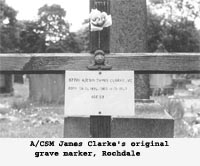
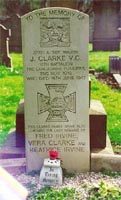
Birch Hill Hospital, Rochdale, Lancashire. His grave remained marked by only a simple wooden cross until 1994 when the
Lancashire Fusiliers Regimental Association spearheaded a drive to replace the cross with a more permanent marker.
Clarke's medals are privately held.


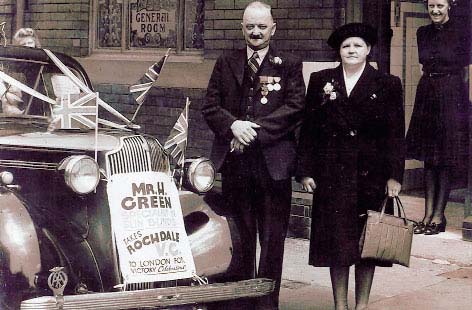
A fitting salute to our very own VC war hero
Published: 27th January 2006
in the
Rochdale Observer

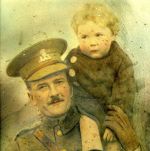
MY daddy’s a hero... James Clarke hoists one of his children on his shoulders.
IN a quiet corner of Rochdale Cemetery lies the neatly tended grave of James Clarke, who died in June 1947 at the age of 54.

At first glance it looks just like the thousands of other silent tombstones in the cemetery, the final resting place of a man with a fairly common name.

But this grave contains the mortal remains of the only Rochdale soldier to be awarded the Victoria Cross, the nation’s highest award for gallantry.

Sunday marks the 150th anniversary of the Victoria Cross, an appropriate time to reveal the full story of James Clarke, as Touchstones plans to do in a special exhibition which opens on 28 February and runs until July.

To mark the anniversary, Touchstones will display, for the first time, a gold watch presented to Mr Clarke by grateful townsfolk. His VC is now in a private collection.

James Clarke was born in Winsford, Cheshire, in April 1894.

He began his working life as a farm labourer, moving to Rochdale in 1913 where he worked as a carter for Butterworth Brothers in Milnrow and then William Tatham and Sons engineers.

He married in August 1915 and lived in Clyde Street, off Vavasour Street, before, in October of that year, he enlisted into the 6th (Rochdale) Battalion, Lancashire Fusiliers.

He was posted to the Western Front, where he rose to the rank of Regimental Sergeant Major.

On 2 November 1918 he was in charge of a platoon which braved heavy machine gun fire to reach a well-defended ridge.

In the action, RSM Clarke and his men captured four machine guns and single handedly bayonetted the crews.

Later he led the remnants of his platoon to capture three more machine guns and many prisoners.

The next day, after capturing more prisoners, he was able to hold up an enemy advance.

The day after, in an attack on the Oise Sambre Canal, under heavy fire from the bank, he rushed forward with his team in the face of an intense barrage, brought his gun into action and effectively silenced the enemy.

His citation for his VC read: "Throughout all the operation RSM Clarke acted with magnificent bravery and total disregard for his personal safety, setting an inspiring example to all ranks".

On 1 February 1919 a large crowd welcomed him home to Rochdale, where he was presented with commemorative gifts including a gold watch.

Days later he was presented with the Victoria Cross by King George V at Buckingham Palace.

Mr Clarke went on to attend reunions of VC winners in 1920 and 1929, while working as a stoker in Rochdale, but he lost his job when ill-health overtook him.

With three children to bring up, his wife found work in a cotton mill while Mr Clarke bought a barrel organ, playing it around the streets of Manchester.

His story doesn’t end there, though.

In 1933 he went to London and was arrested by police for obstructing a footpath.

Proudly wearing his medals at his court appearance, Mr Clarke was discharged on probation by the judge after hearing of his impressive war record.

He returned to the family home in Milnrow Road and died in Birch Hill Hospital on 16 June 1947 at the age of 54.

He was buried with full military honours at Rochdale Cemetery a few days later.

In July 1984 his medals came up for auction at Christie’s where they were bought by a private collector for £8,800.

The Victoria Cross was born in the carnage of the Crimean War, even though the fighting had ended a good year before.

Since its inception the VC, founded by Royal Warrant on 29 January 1856, has been awarded 1,350 times.

The youngest recipient was 15 and the oldest 69.

Terry McCully writes
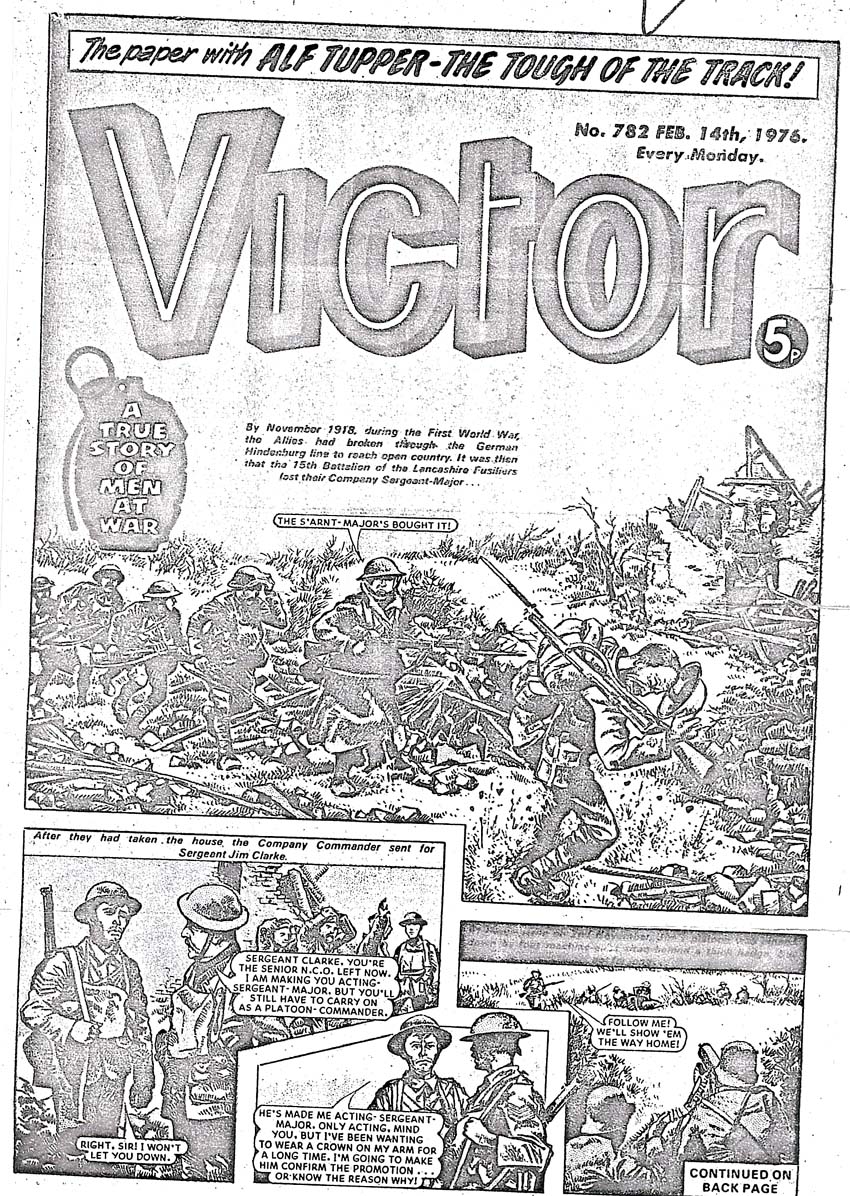
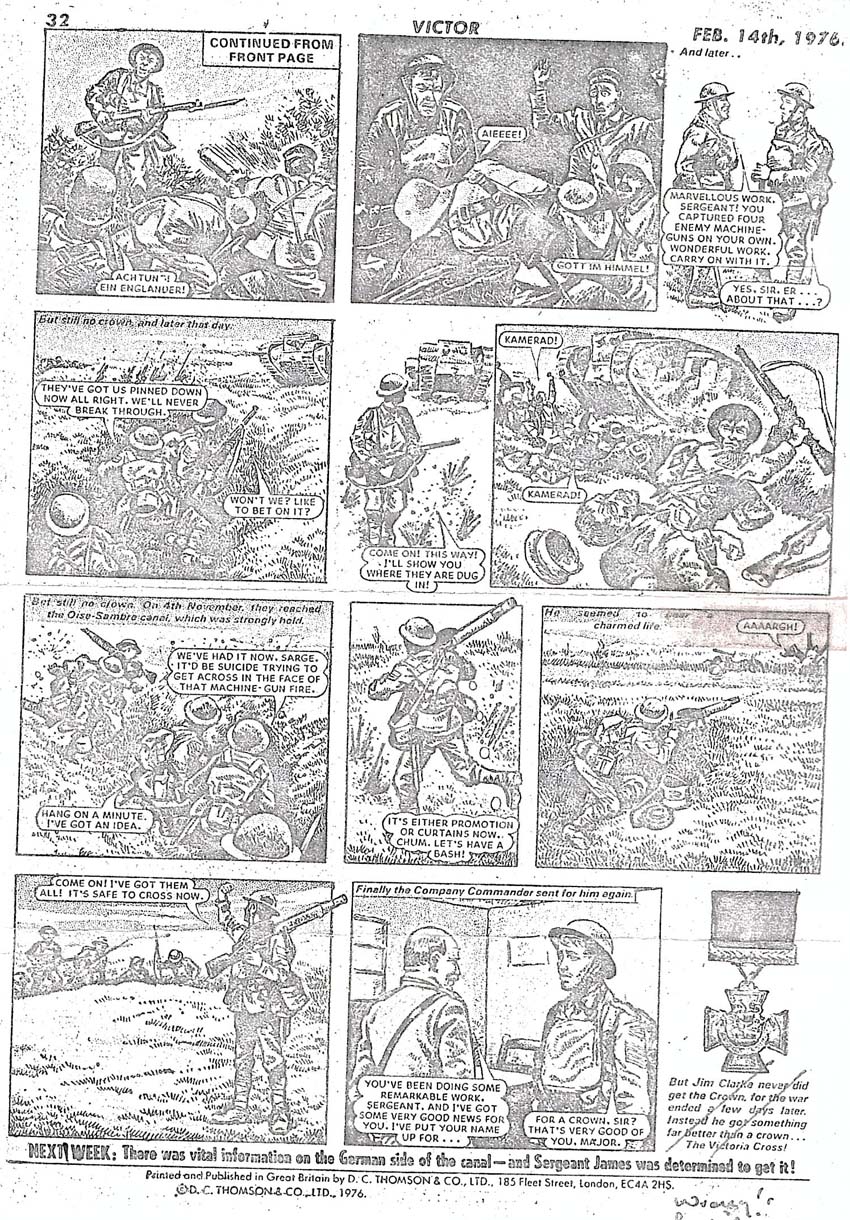
I had the pleasure of meeting his grandson last time I was in Rochdale, and he showed me a short story from the Victor comic, where they had a write up on the action. It is his father that is on RSM Clark's shoulders. What wasn't told in the story was that to get to London to pick up his medal he had to walk to London because he didn't have enough money for the fare. Also the medals were sold into a private collection because the family was somewhat destitite at the time.

Some more from Terry
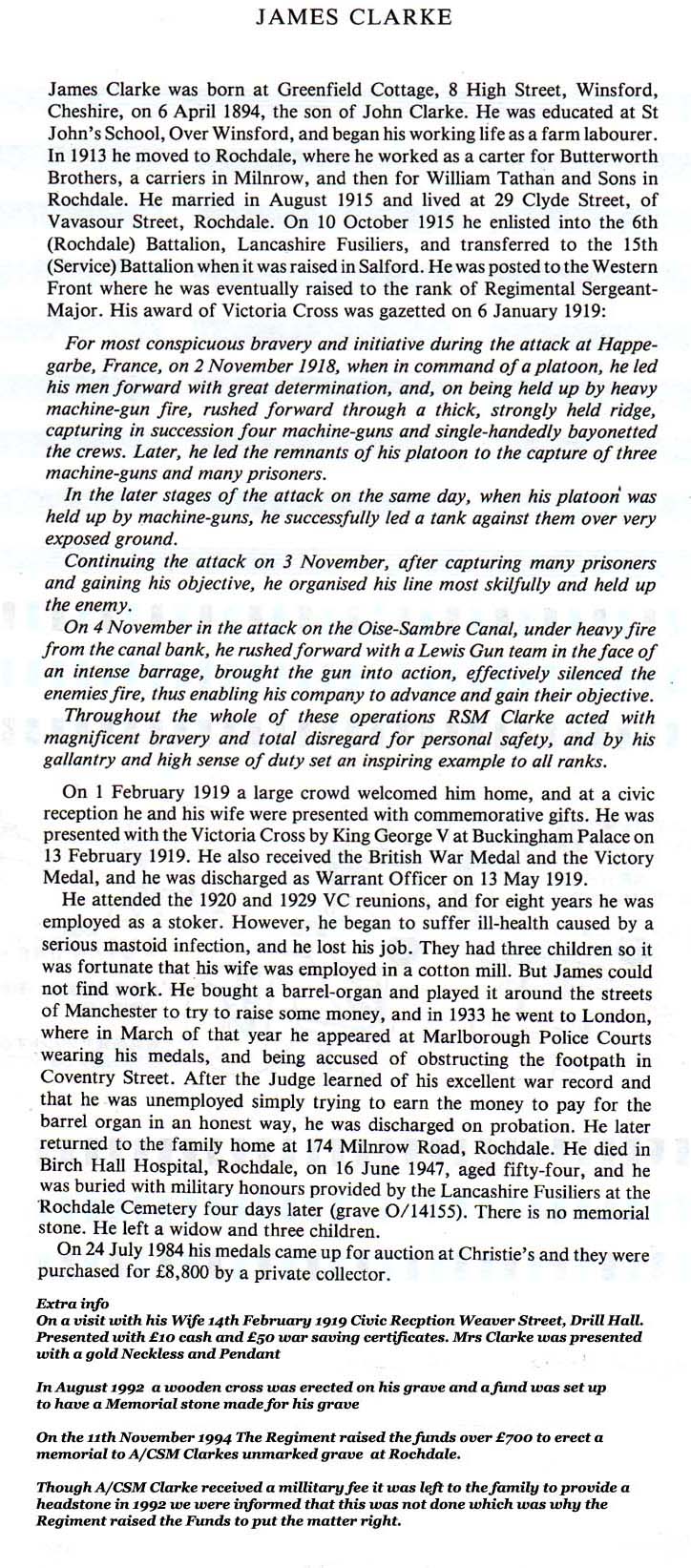
I received the attached documents from Sgt Clarke's great grandson last time I was over in England

Sent in by Ian Lewis

Ian Lewis did some interviews in the 80's with some of the 1st & 2nd Salford Pals
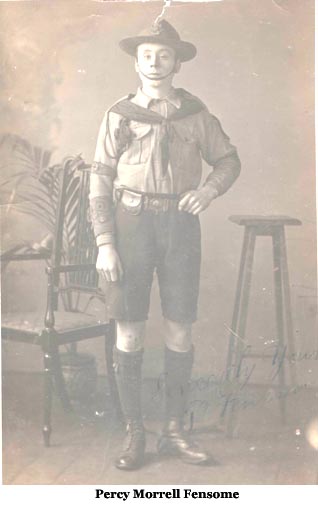
one of the guys he interviewed was Sgt Bill Dutton, 15th LFs of Salford. In circa 1987 he lived alone in the kitchen of his council house in Salford smoking a broken pipe. Along the way he told me of his best friend, Percy Morrell Fensome. Just before July 1st they fell out and shortly after Percy went to hospital. While there his mother wrote to Percy telling him to make up with Bill - thus on the night of June 30th Percy got himself out of hospital and found Bill in the first line trench at Thiepval and they shook hands and made up.
Bill never saw Percy again.

Percy Morrell Fensome's photograph.
Percy's name is on the Thiepval Memorial.
In memory of Sgt William Dutton, a fine old soldier?
In 1927 Bill cycled to the Somme to find Percy's grave and continued to go back seeking out his friend until the 1960s I believe, with no success. As he told me this story tears rolled down his cheek. He gave me Percy's photo and I gave my word that I would do all I could to maintain the memory of his friend. In recent years I studied history at Lancaster & dedicated two pieces of work to Percy Fensome.
Hopefully we will get some more of the interviews Ian did, thanks Ian