|
10th Bn |
|
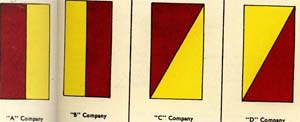
Battle Signs by Company
 |
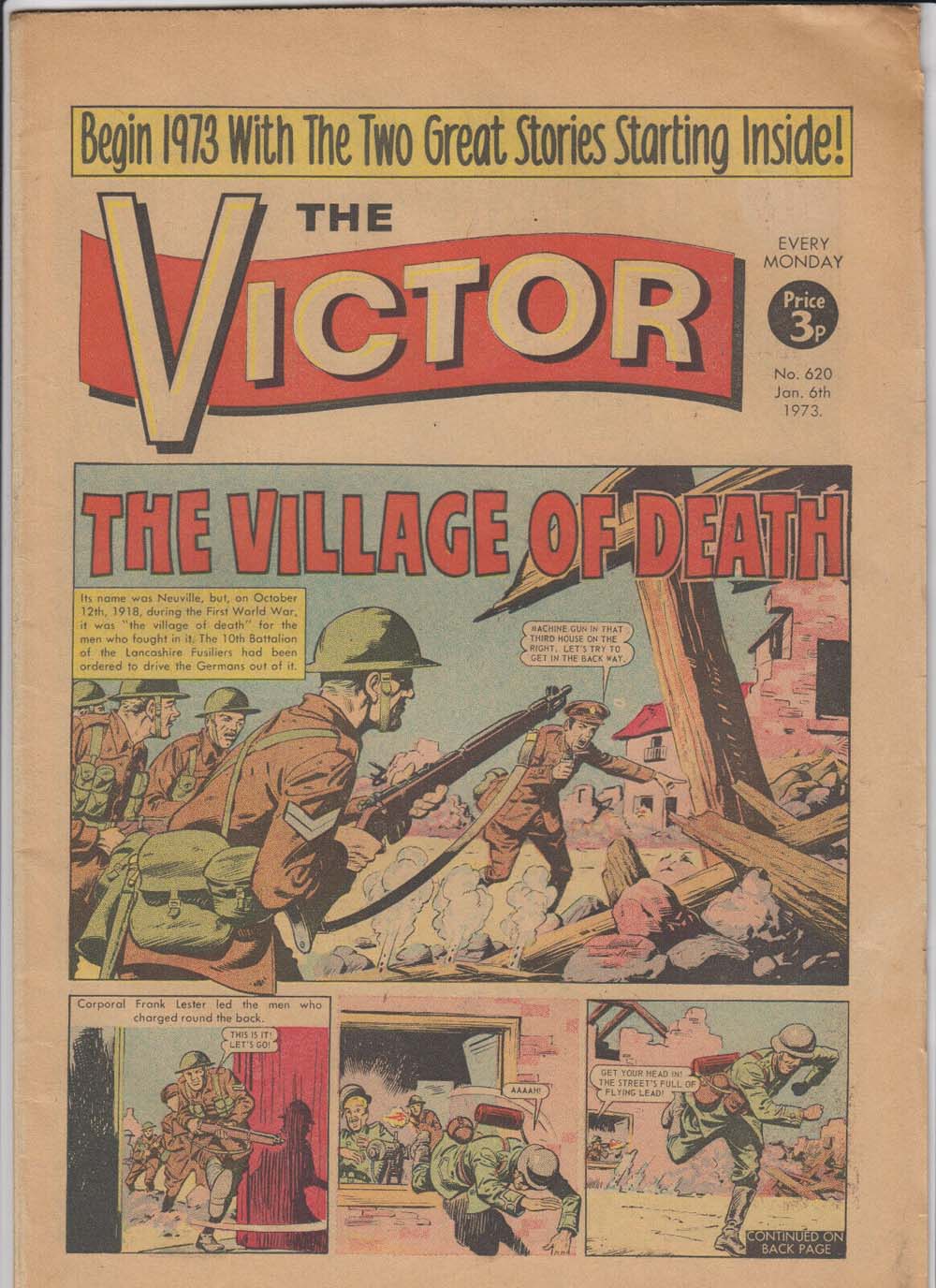
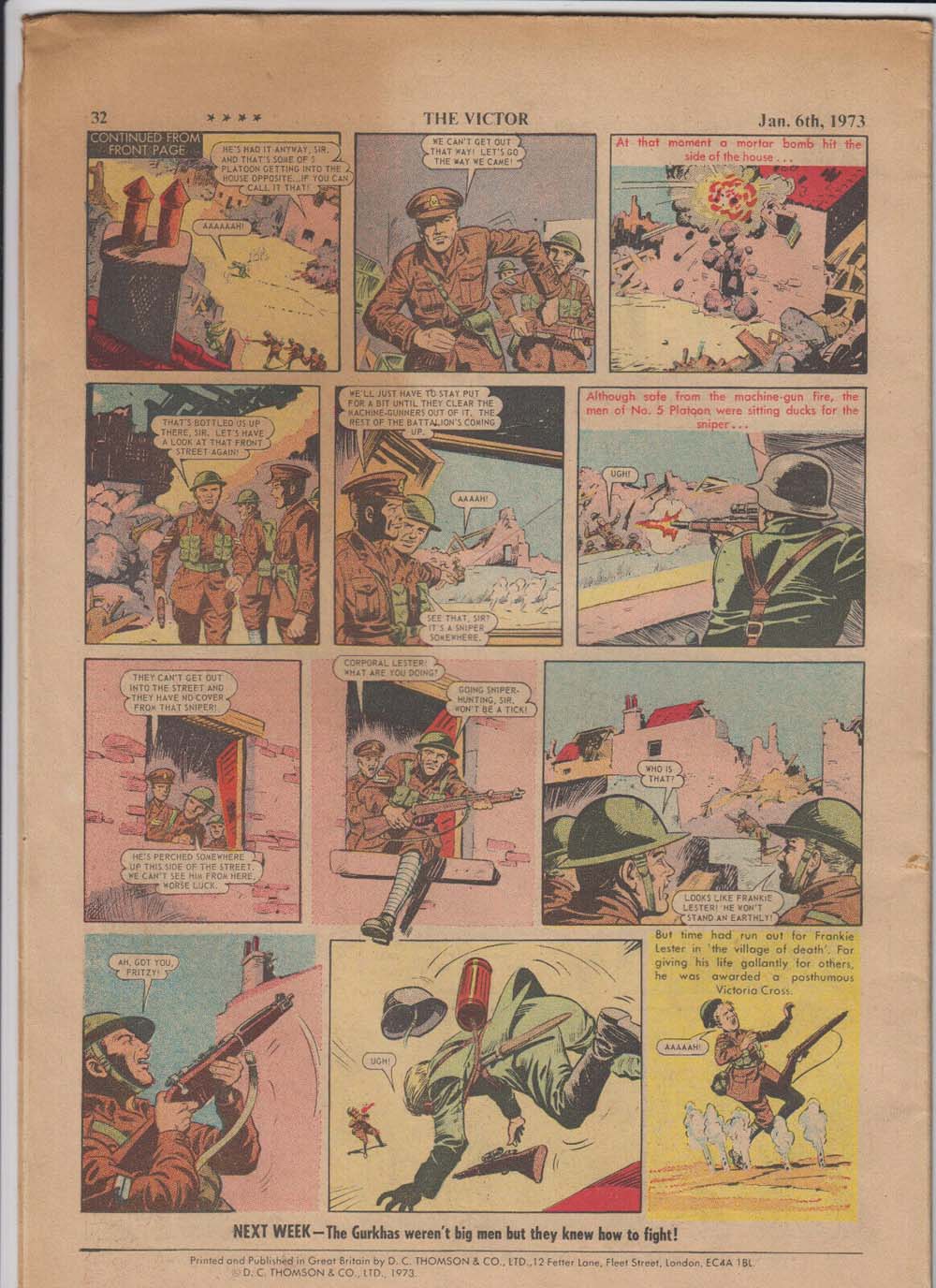
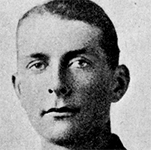 51674 Private Frank Lester VC 10th Battalion The Lancashire Fusiliers who died on Saturday, 12th October 1918. Age 22. Frank Lester was born on 18th February 1896 in Huyton, Liverpool to John and Ellen Lester. He spent his early childhood in Hoylake where he attended Hoylake National School. Frank was a keen member of Hoylake Boys Brigade and also played the organ for the local congregation at the Methodist 'Tin Chapel'. On completing his education, Frank trained initially as a joiner until his family moved to Millers Hay in Irby. Here he worked alongside his father in their family run market garden business. In 1916, Frank enlisted in the Lancashire Fusiliers and was posted to France in 1917. In early 1918 he was wounded but he returned to duty in September of that year. On 12th October, one month before the end of the war, Frank was killed at Neuvilly in France in the action for which he was posthumously awarded the Victoria Cross, the highest award for bravery. An extract from "The London Gazette," No. 31067, dated 13th Dec., 1918, records the following: 'For most conspicuous bravery and self-sacrifice during the clearing of the village of Neuvilly, on 12th October, 1918, when, with a party of about seven men under an officer, he was the first to enter a house from the back door, and shot two Germans as they attempted to get out by the front door. A minute later a fall of masonry blocked the door by which the party had entered. The only exit into the street was under fire at point-blank range. The street was also swept by fire of machine guns at close range. Observing that an enemy sniper was causing heavy casualties to a party in a house across the street, Pte. Lester exclaimed, "I'll settle him," and, dashing out into the street, shot the sniper at close quarters, falling mortally wounded at the same instant. This gallant man well knew it was certain death to go into the street, and the party opposite was faced with the alternative of crossing the fire-swept street or staying where it was and being shot one by one. To save their lives he sacrificed his own.' He lies in Neuvilly Communal Cemetery and Extension, Nord, France. Neuvilly is a small village 6 kilometres north-north-west of Le Cateau on the road to Valenciennes (D955). The Communal Cemetery and extension are on the north side of the village outskirts and on the north side of the main road (D955). The VC was sold in 2002 and can now be seen in the
display of Lord Ashcroft's collection of VCs in the Imperial War Museum
Lond
|
|
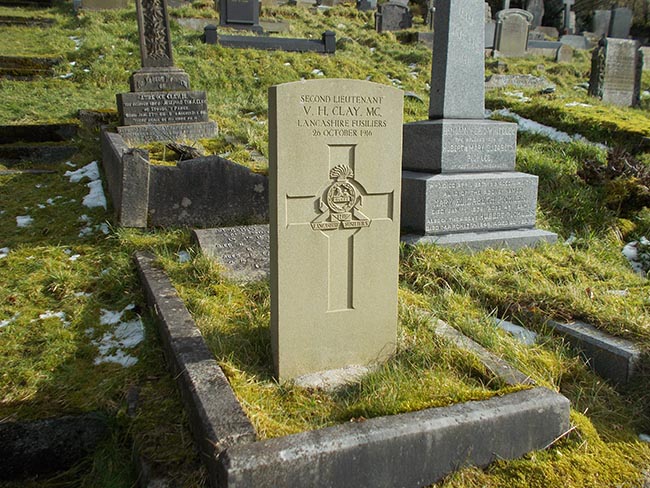
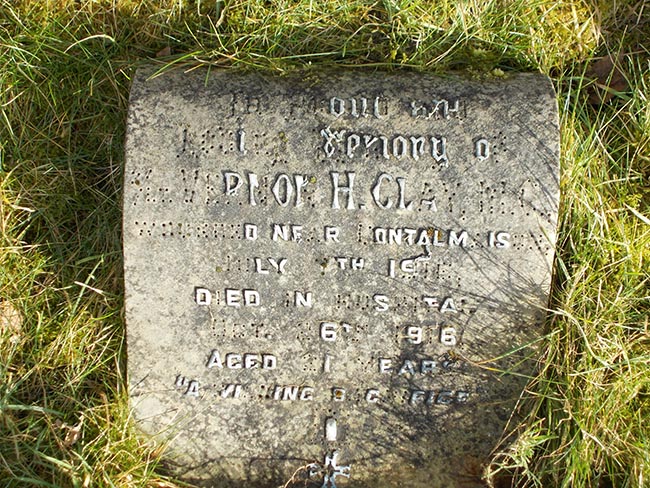
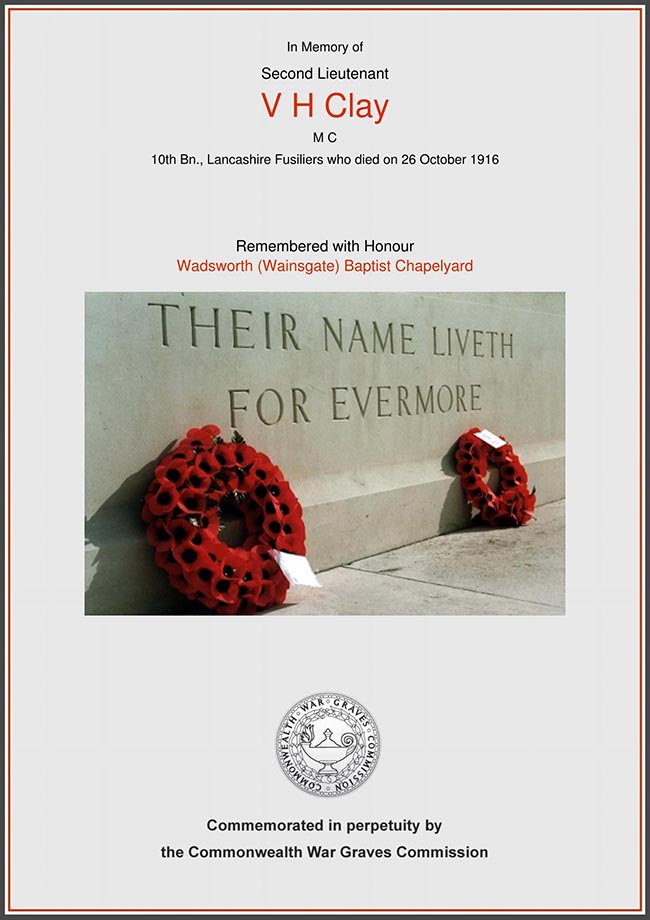
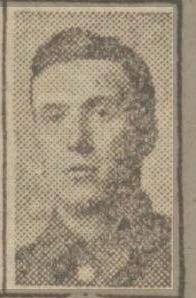
2nd Lt V H CLAY MC
He was awarded his MC on 25.8.16 as a Temporary Second Lieutenant
of the 10th Bn There is a 2nd grave at Wainsgate Chapel, Old Town, Hebden Bridge, which has the Lancashire Fusiliers badge engraved on a plaque commemmorating Ronnie Bates Snr (1929 - 1985) and his wife Edna May (1929- 1989). Also buried in this plot is their son Ronnie Bates (1953 - 1998). At the time of his death he lived at Brearley (between Hebden
Bridge and Halifax), but I have no information regarding his service
with the Lancashire Fusiliers. |
In Memoriam
|
Died on 07/07/1916 Private Fred Hall 10th Lancashire Fusiliers Private Fred Hall, aged 22, who resided at 84, Langley
Lane, Hebers, and was serving with the 10th Battalion of the Lancashire
Fusiliers, was killed on July 7th, 1916. Private Fred Hall’s burial plot must have been lost again in further fighting as he’s commemorated on the Thiepval Memorial to the Missing. |
|
Died day 06/07/1917
Private Fred Heywood 10th Lancashire Fusiliers Private Fred Heywood was killed in action in July, 1917, whilst fighting with the Lancashire Fusiliers. He was 40 years of age, and resided at 8, East View, Middleton, joining the forces on August 22nd 1916, and going to the front in December of that year. He was employed by Messrs. T. B. Wood and Son, Park Mill, and was connected with the New Jerusalem Church. Private Heywood has no known grave, so his name is on the Arras Memorial to the Missing |
|
Died on 12/05/1917
Private Harry Anslow Private Tom Delaney Corporal Ernest Smithies 10th Lancashire Fusiliers Private Harry Anslow, is the son of Mr and Mrs Anslow, of 18, Clarkson Street, Rhodes, was killed in action on May 12th, 1917, whilst serving with the Lancashire Fusiliers. The deceased soldier was 28 years of age and joined the army in April 1916, going to France in November of that year. Prior to enlistment he was a branch manager with one of Duckworth's shops in Rochdale. He was a member of All Saints Church Rhodes. Private Tom Delaney, son of Mr and Mrs Delaney of Stocks Lane Alkrington, was killed in action on May 12th, 1917, whilst fighting with the Lancashire Fusiliers. He worked at the Lodge Mills and was connected with St Peters Church Corporal Ernest Smithies, age 24, of the Lancashire Fusiliers, previously reported missing, was afterwards presumed to have been killed. He was a son of Mr and Mrs Smithies, of 60, Boardman Lane, Rhodes, and enlisted in April, 1917, going to the front in August of same year. He was employed by the Rhodes Cooperative Society and was connected with the Rhodes Wesleyan Church We have three Middleton men today, as they all died
together in the same attack. The taking of German trenches at Gavrelle.
Unfortunately this attack was unsuccessful, they were machine gunned
down and the few who made it into the trenches were forced back into
their own lines. 13 out of 15 officers and 226 other ranks were casualties. As the attack was a failure, the dying men were left in no mans land as it would have been too dangerous to bring their bodies in for burial, which would explain why 95% of the dead from this battalion who died on this day have no known grave, the three Middleton men are among those whose name is commemorated on the Arras Memorial. |
|
Died on 4/02/1917
Private George Kenyon 10th Lancashire Fusiliers. Private George Kenyon, of the Lancashire Fusiliers, was killed in action in France, on February 4th, 1917. He resided at 9, Manchester New Road, Middleton, and joined the colours in August, 1915, going to France on February 4th, 1916. He was killed exactly 12 months to the day from landing in France. He was only 19 years of age, and left a widow and one child. Prior to enlisting he worked at the Irk Mill and was an enthusiastic footballer, having played with Newtown. Private Kenyon is believed
to be buried at |
|
Died on 18/10/1918
Private Frank Cartwright 10th Lancashire Fusiliers. Private Frank Cartwright, aged 23, of the Lancashire
Fusiliers, was killed in France on October 18th, 1918. He resided at
86 Green Street, Middleton, and was employed at the Soudan Mill. *(I haven't been able to verify this, as there is no record of him winning one) His brother Peter, was killed the year before in November, 1917. Both brothers have no known grave |
|
Died on 18/08/1916
Private Albert Harvey Jepson, of the Lancashire Fusiliers, and who resided at Brassey Street, Middleton, was killed in action on August 18th, 1916. He was 22 years of age and joined the army under the Derby scheme in April 1916, and had only been at the front a few weeks when he was killed. He was formally employed by Messrs. Chadwick and Smith, Middleton. He was well known in Blackley, also his parents residing at Pike Fold House, and as a boy he attended the Blackley Municipal School. Private Jepson has no known grave and is commemorated on the Thiepval Memorial on the Somme. |
|
Died on 12/05/1917
Private Harry Anslow Private Tom Delaney Corporal Ernest Smithies 10th Lancashire Fusiliers Private Harry Anslow, is the son of Mr and Mrs Anslow, of 18, Clarkson Street, Rhodes, was killed in action on May 12th, 1917, whilst serving with the Lancashire Fusiliers. The deceased soldier was 28 years of age and joined the army in April 1916, going to France in November of that year. Prior to enlistment he was a branch manager with one of Duckworth's shops in Rochdale. He was a member of All Saints Church Rhodes. Private Tom Delaney, son of Mr and Mrs Delaney of Stocks Lane Alkrington, was killed in action on May 12th, 1917, whilst fighting with the Lancashire Fusiliers. He worked at the Lodge Mills and was connected with St Peters Church Corporal Ernest Smithies, age 24, of the Lancashire Fusiliers, previously reported missing, was afterwards presumed to have been killed. He was a son of Mr and Mrs Smithies, of 60, Boardman Lane, Rhodes, and enlisted in April, 1917, going to the front in August of same year. He was employed by the Rhodes Cooperative Society and was connected with the Rhodes Wesleyan Church We have three Middleton men today, as they all died
together in the same attack. The taking of German trenches at Gavrelle.
Unfortunately this attack was unsuccessful, they were machine gunned
down and the few who made it into the trenches were forced back into
their own lines. 13 out of 15 officers and 226 other ranks were casualties. As the attack was a failure, the dying men were left in no mans land as it would have been too dangerous to bring their bodies in for burial, which would explain why 95% of the dead from this battalion who died on this day, have no known grave, the three Middleton men are among those whose name is commemorated on the Arras Memoria |
|
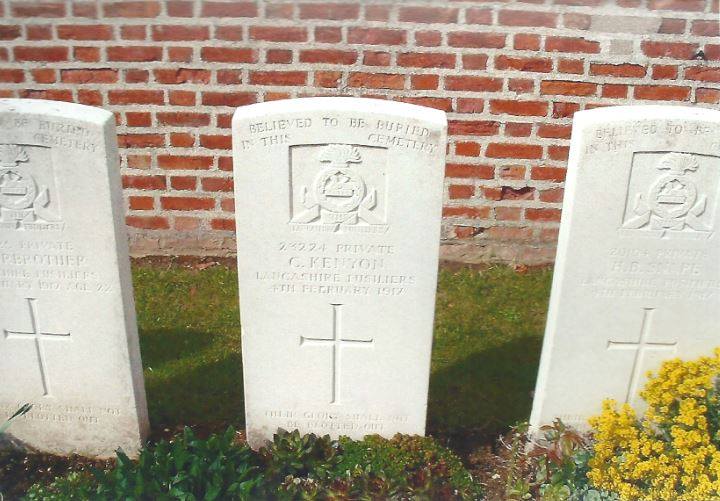
Private George Kenyon
10th Lancashire Fusiliers. Private George Kenyon, of the Lancashire Fusiliers, was killed in action in France, on February 4th, 1917. He resided at 9, Manchester New Road, Middleton, and joined the colours in August, 1915, going to France on February 4th, 1916. He was killed exactly 12 months to the day from landing in France. He was only 19 years of age, and left a widow and one child. Prior to enlisting he worked at the Irk Mill and was an enthusiastic footballer, having played with Newtown. Private Kenyon is believed to be buried at |
|
|
|
|
|
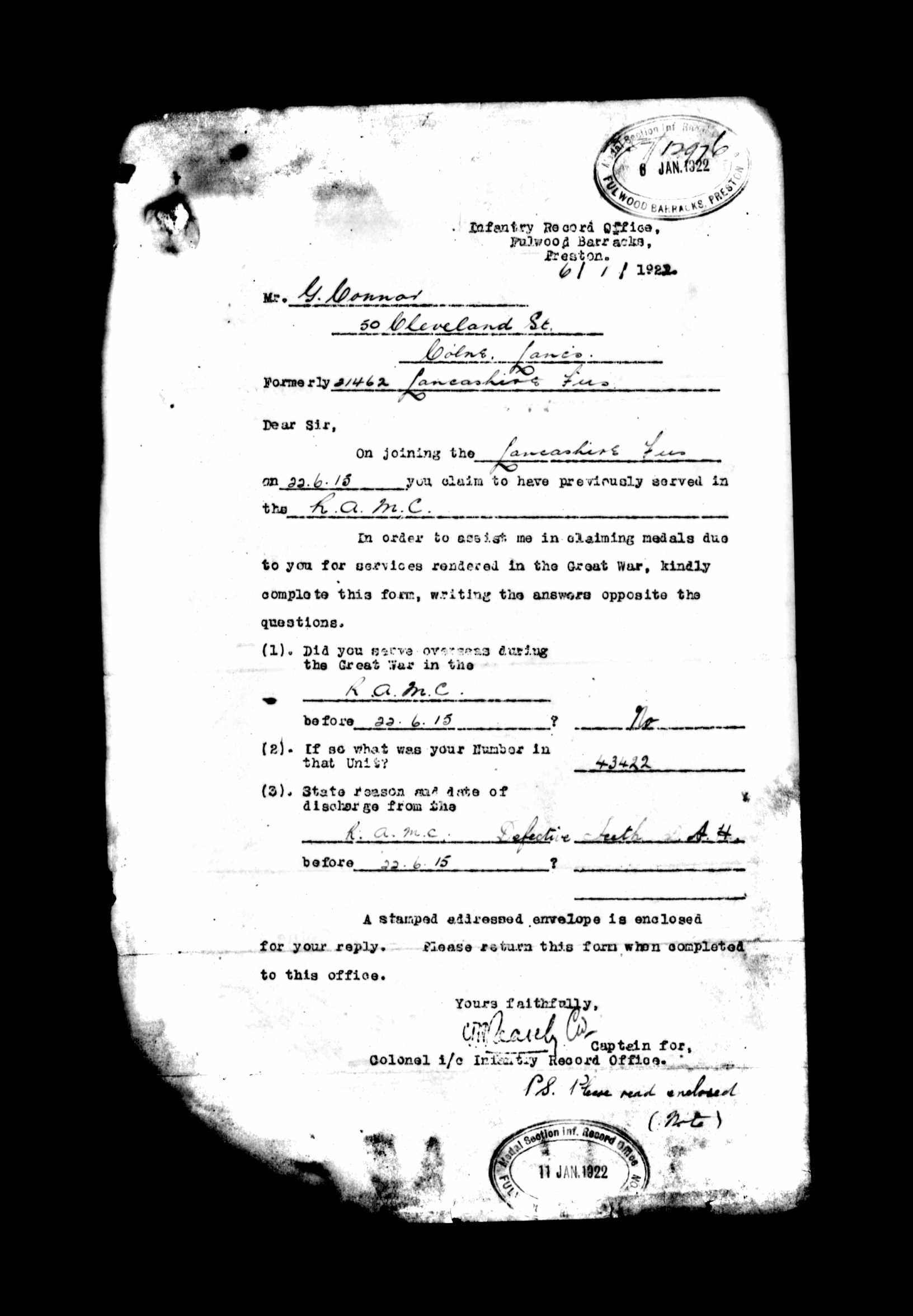
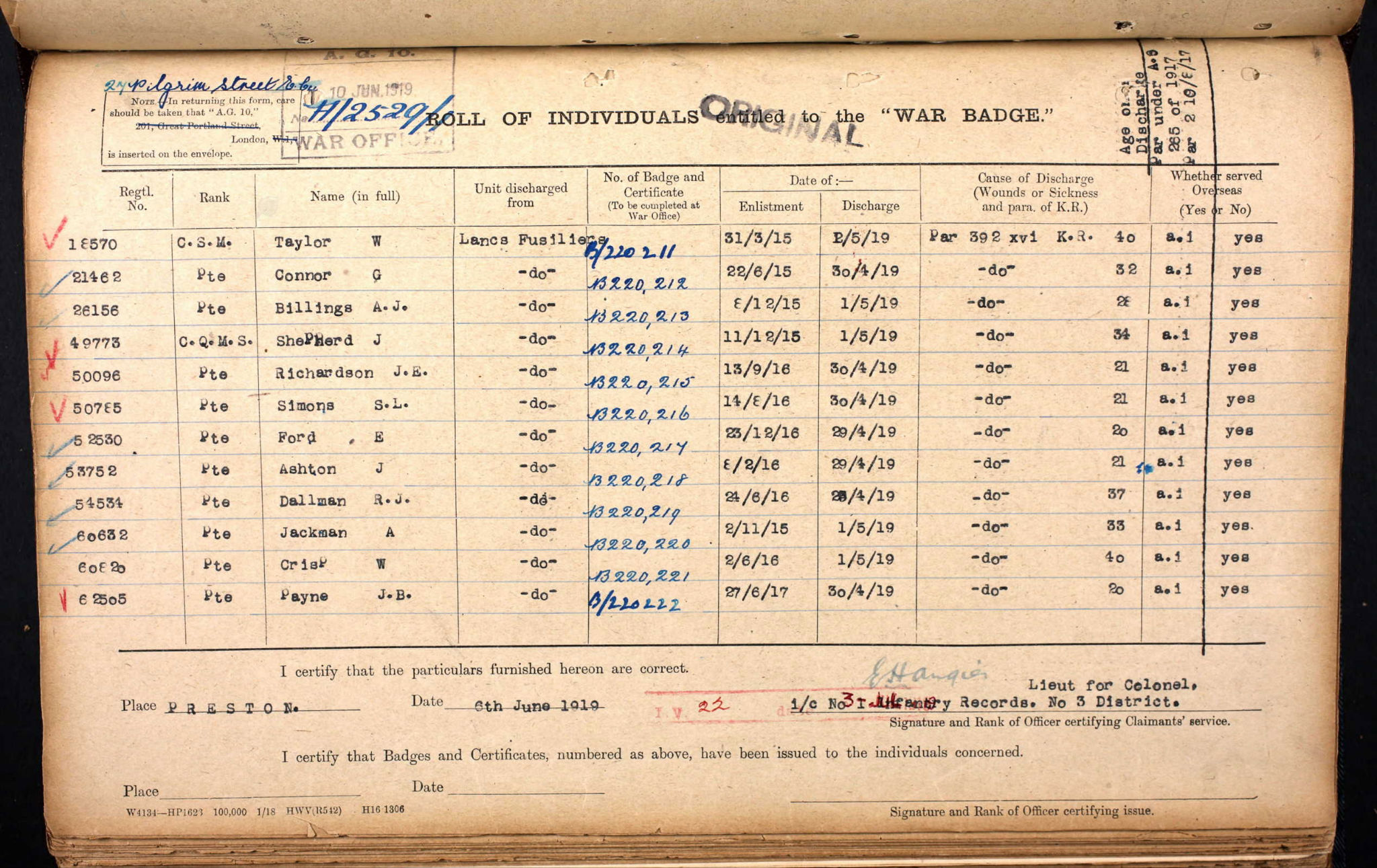
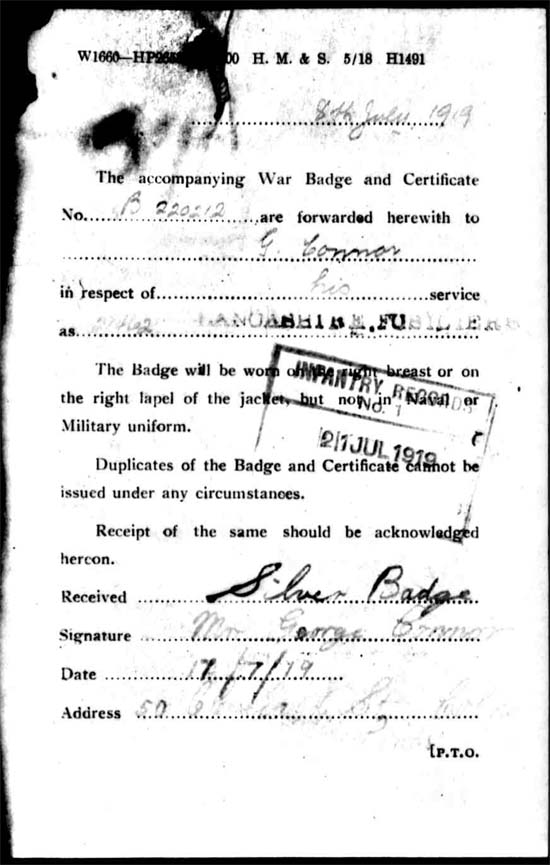
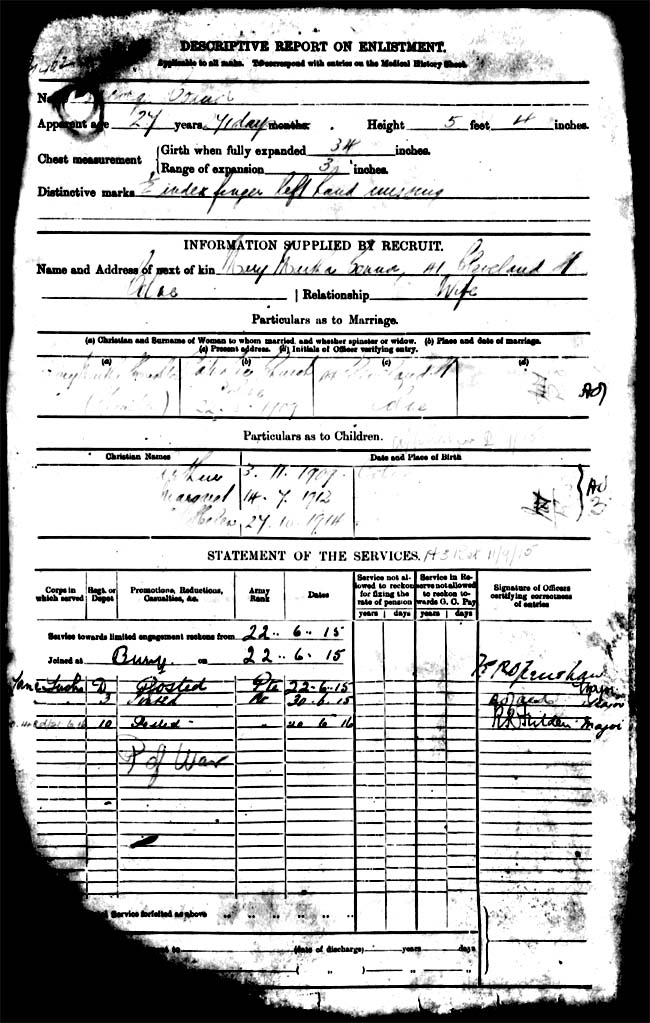
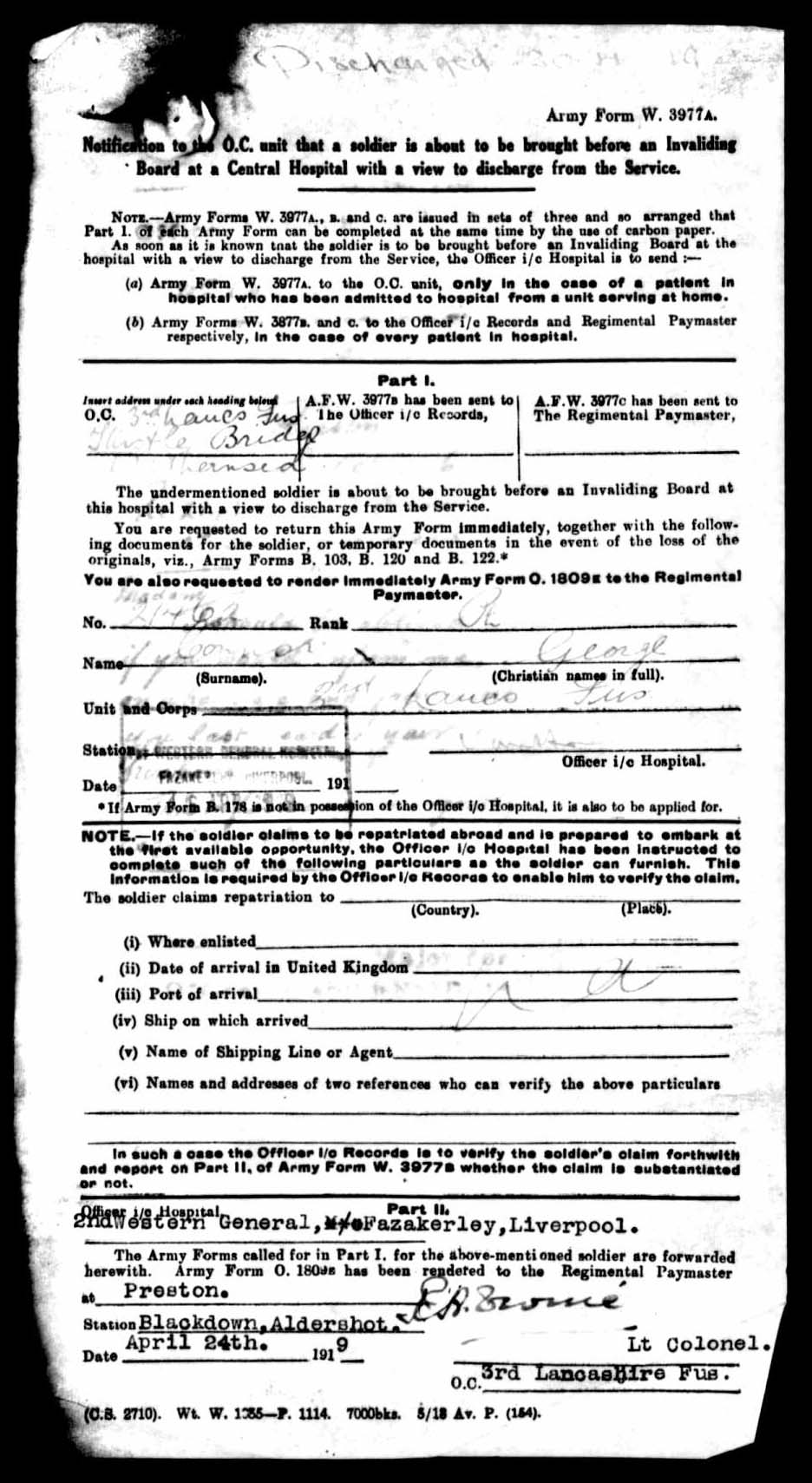
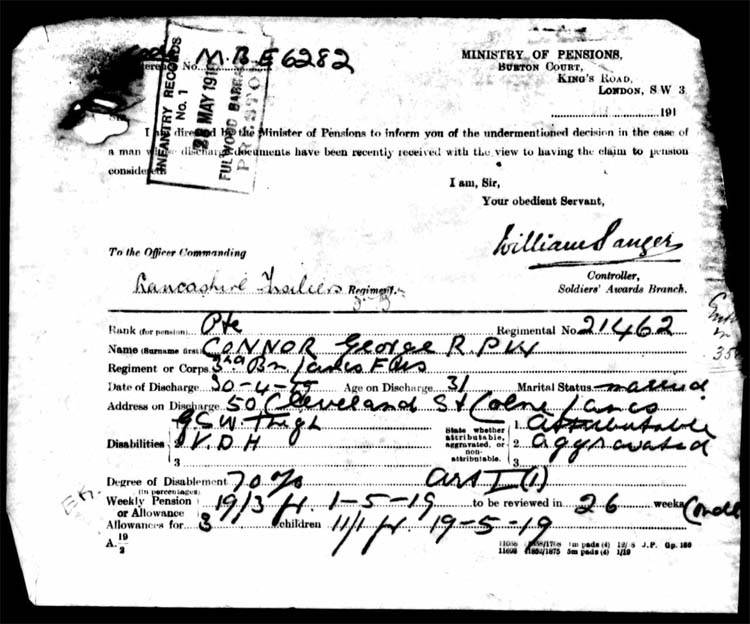
21462 Pte George Connor George Connor was 27 years old, married with 3 children when
he enlisted at Bury into the 3rd Bn The Lancashire Fusiliers in June
1915.
George Conner's Service records
|
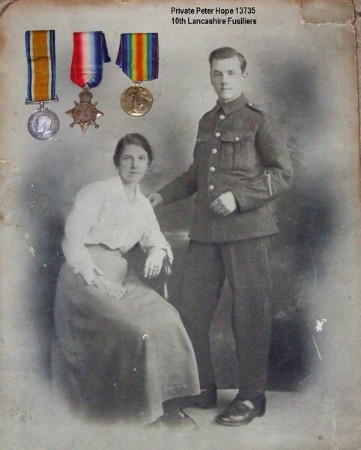 This is Peter Hope Snr His Son was in the 1st / 5th at Dunkirk Click here to see his son photos sent in by David Hope his grandson |
|
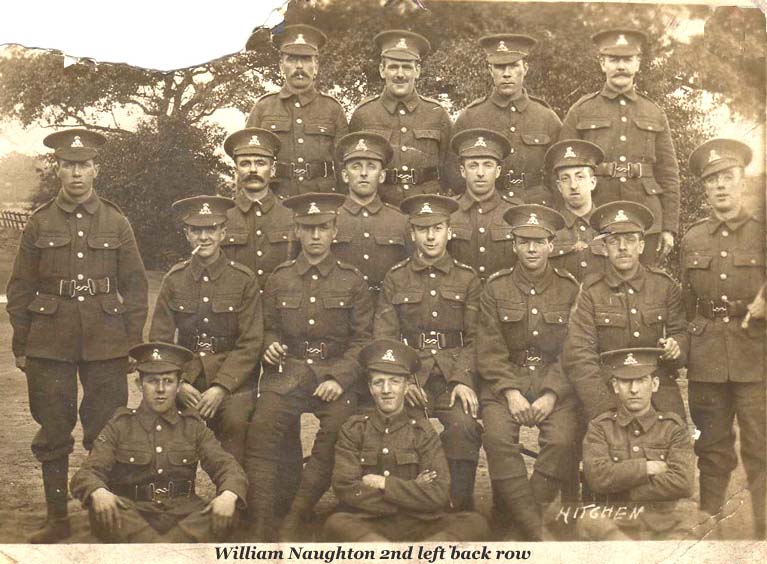
The gent standing on the right end of the
line is thought to be |
 38007 Private Alfred Driver 10th Battlion Lancashire Fusilliers Died 5th January 1917 from Trench Foot aged 24 Buried at Rouen St Sever Cemetery Extension http://www.cwgc.org/search/casualty_details.aspx?casualty=517162 |
 |
 |
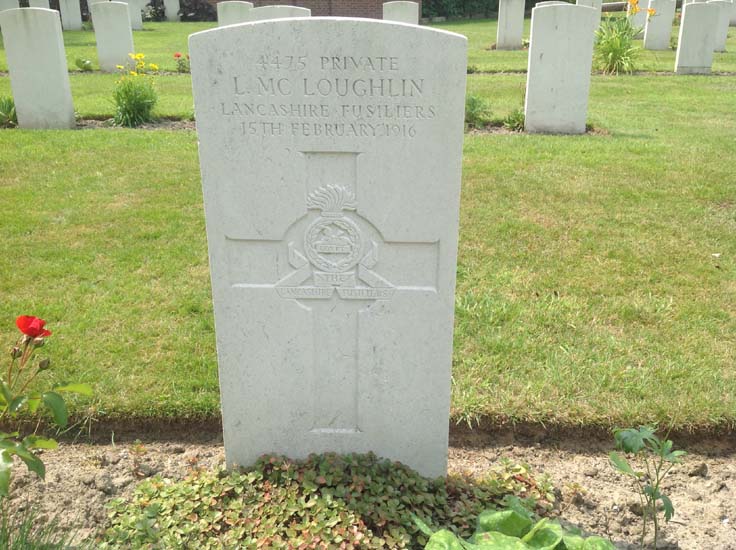
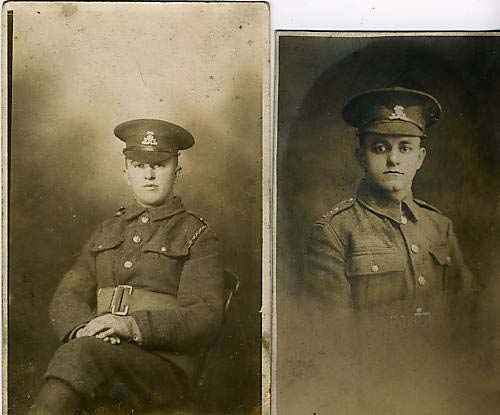 WW1 photos (postcard format) written in old hand on each is the word Delaney and we believe these are the Delaney brothers of Middleton, Manchester, killed in action in WW1: Pte Thomas Delaney 10th Battalion Lancashire Fusiliers Name: DELANEY, THOMAS and his brother Pte Frederick Delaney 2nd/5th Battalion Lancashire Fusiliers Name: DELANEY, FREDERICK |
|
10th Bn Lancashire Fusiliers |
|
D Company of the 10th Bn were overun on the 26th March at Mametz
Woods near Henencourt.
|
 Captain T Howarth MC and Bar. He won a Military Cross twice, once with the 10th Battalion in 1916 at the battle of Albert ,Gazetted 26/01/17 and again with the 1st Bn (attached to the 10th Bn) at Martinpuiche Gazetted on the 02/12/18. |
|
Died on 04/11/16
Private James Tiffney, of the Lancashire Fusiliers,
was killed on November 4th, 1916. A comrade wrote; "He was killed
whilst doing a kind action. He was very much liked by all the comrades
in the platoon all of whom send our deepest sympathy to you in your
great loss. Private Tiffney has no known grave and is commemorated on the Thiepval Memorial, France. |



.jpg)
.jpg)
.jpg)
.jpg)

.jpg)