Site Menu

Lancashire Fusiliers of Interest
Famous

(or infamous)

Lancashire Fusiliers


L/Cpl Joseph Delaney served with the 2nd Bn The XXth The Lancashire Fusiliers From 1939 until 1943

L/Cpl Delaney died in July 1958.

His daughter was Shelagh Delaney who wrote the play "A Taste of Honey" when she was just 19 years of age.

The play was set in Salford.

You may recall it as a wonderful film in 1961 with Rita Tushingham

Ha Ha I remember the film very well. The opening credits featured one of the strangest Salford Bus routes ever! The characters were on a green Salford bus supposedly going through Salford. One minute they were travelling along Frederick Road, then in Piccadilly Gardens going past the Victoria Monument, then somewhere along Deansgate, then up to and travelling along what is now the Crescent. All this in a 40 second clip!! The mother of Rita Tushingham's character was played by Dora Bryan who stole the film for me as a typical Salford Lass of the period. Her ' wide-boy ' boyfriend had a Vauxhall Victor F Type, the ones were the front screen fell out if you slammed the doors to hard!! Thanks, a wonderful memory jerker.
Geoff P


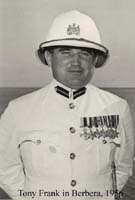
Captain Anthony Mutrie Frank
Lancashire Fusilier

Then
Unit : "A" Company, 2nd Parachute Battalion
Army No. : 99817
Awards : Military Cross, Silver Star, Mentioned in Despatches

Click here to read his story


"Ian Greaves, Lancashire Fusilier National Service Sergeant
and Manchester United Footballer"

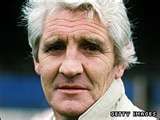
Ian Greaves when manager of Bolton

Ian Greaves Busby Babe turned successful manager
by Brian Glanville
The Guardian, Friday 9 January 2009

From 1953 to 1960, Ian Greaves, who has died aged 76, played for Manchester United. As a "Busby Babe" he won a championship medal (1955-56) and replaced Roger Byrne, killed in the Munich crash, at left-back in the 1958 FA Cup final. Yet Greaves became better known as the manager of five clubs, notably Bolton Wanderers (1974-80).

Greaves won his championship medal as a right-back, initially standing in for the injured Bill Foulkes. Greaves did so well that he kept out Foulkes out for the rest of that season.

Born in Oldham, Greaves was an effective rather than a stylish defender. He played 15 championship games for his medal, altogether making 67 first team appearances for United. A knee injury undermined his form at Old Trafford, and in 1960 he dropped down the leagues to Lincoln City, playing just 11 games during 1960-61. He also played 22 times for Oldham Athletic, before going into management with Huddersfield Town (1968-74).

The Yorkshire team's glory days were history, but in his second season he took them back up to the top division as champions, with star striker Frank Worthington scoring 22 goals. Huddersfield could hardly compete in the transfer market with more affluent clubs, but he kept them in the top division until 1972. In 1974, he succeeded Jimmy Armfield at Bolton Wanderers.

Bolton had beaten Manchester United in that 1958 Cup final. They had slipped out of the first division 10 years earlier but Greaves brought them back again, with Worthington reunited with Greaves, after a spell at Leicester City, contributing 11 goals. The uncompromising centre-back was Sam Allardyce, while another future manager, Peter Reid, was the tireless engine of the midfield. Bolton's 58 points put them one ahead of Southampton and two before Tottenham.

So successful was Greaves at Bolton that he was briefly a contender to succeed the volatile Tommy Docherty as manager of Manchester United. He kept Bolton in the top division until the end of the 1979-80 season, when they were relegated in last place.

He took charge of Oxford United, (1980-82), had a very short spell at Wolverhampton Wanderers (relegated in 1982) and finally moved to fourth division Mansfield Town (1983-89). He got them into the third division in 1986.

There was even a less glamorous return for him to Wembley, where Mansfield won the 1987 Freight Rover Trophy. Bill Dearden, his assistant then, would later manage Notts County. He called Greaves "a true gentleman, whose man management was second to none. He gave the people of Mansfield a great weekend when we won at Wembley." Greaves, recalled Allardyce, "was the man who gave me the chance to fulfil my boyhood dreams. You really wanted to play for him. He had a fantastic rapport with his players and long after he retired, he was always there for advice ... many of us have a lot to thank him for. He was a special man."

He is survived by his wife and daughter.

• Ian Denzil Greaves, footballer and manager, born 26 May 1932; died 2 January 2009

These are the messages left on our Message Board
Ian Greaves the well liked and respected football player and manager died on the 2nd January 2009.I have it on good authority that he played for the Lancashire Fusiliers during his National Service, sometime in the early 1950s. Can anyone fill in the details for us ?
Thanks.
See the link below.
Joe Eastwood.
Omnia Audax XXth
Click Here for the Ian Greaves The Independent Obituary
_______________________________________________________
I am sorry to hear of the death of Ian Greaves. He was in "D" Coy. He was from Shaw nr Oldham. He played for the Battalion as a full back, and also played for the Battalion cricket team, a good mate.
I remember he was playing for Man Utd after their air crash...I was watching the sports news on TV and was surprised to see Ian being interviewed....He had cleared the ball with a big boot and demolished a BBC Camera. I did write to him and he replied, but that was the end...I did follow his exploits with Huddersfield but then lost track when I emigrated....
Very sad... RIP Ian.....
Bill Duffy
_________________________________________________________
The letter I received was from Fredrick Sida and he says they served together in Kenya 1951-1952
Steven Fitt
__________________________________________________________
Hi Joe If I remember right he was our first national service Sgt
Eric Freeman.
___________________________________________________________

Greavsy, played centre half for the Bn. He was a fair haired, tall, well-built lad.

I remember watching him playing on that pitch behind the Knook Camp NAAFI and admiring the way he could defensively head the ball across to the feet of which ever, full back.

I think he also played for the Bn hockey team along with Allan Stott, (left wing) Lt Col Bamford, (right wing) Gene, from the B&D (forward line) and me in goal.

Also, one day after I had returned from a PT course in Aldershot, Lammy Naylor (Deceased) and I were in the NAAFI when Greavsy, asked about the course because he wanted to go on it.

Cheers
Jim Costello
Austrailia
__________________________________________________

I also remember Lammy Naylor, telling me about Greavsy, and United in about '55 or '56. I had been away for a while in Manaus.

Now I'll have to take a whole pack of Paracetamol to fix my bit of a brain.
Jim Costello


"Ensign E G Hellewell XXth Regiment"

I am currently engaged in research to help an American trace one of his family, thought to be with the XXth when they had two Battalions in Bermuda and were the Garrison Regiment from 1841 to 1847.
As part of that research I came across the name of an Ensign by the name of E G Hellewell.
He had sailed with the XXth main body on the ship " Cornwall" and arrived in Bermuda on the 1st November 1841.
I later tried to find pics of the various locations in Bermuda where the XXth had served and to my surprise came across this in a sale of fine art.

View
COMPLETE SET OF THIRTEEN VIEWS FROM SKETCHES BY EDMUND HALLEWELL
Finely coloured lithographs heightened with gum Arabic, by W. Parrott, circa 1848, the rare set of thirteen plates, bright fresh impressions, trimmed and mounted on card (some watermarked J Whatman, Turkey Mill 1846) as issued, in generally good condition apart from occasional slight foxing and soiling, in addition to some soiling on original mounts. Uniformly framed.
Six views form a panorama of the islands in the Great Sound seen from a hill west of Gibbs Hill lighthouse; four form a panorama from a hill on Spanish Point looking to the Great Sound with the shores of Warwick, Southampton and Sandys parishes beyond; and three views from near St David’s lighthouse form a panorama looking over Smith’s Island to the town and parish of St Georges.
Edmund Gilling Hallewell (1822 – 1869), who was well known as ‘Lieut: & Adjt XX Regt.,’ was commissioned in 1839, in the 20th or East Devons. This battalion was part of the Bermuda garrison between 1846-47.
Hallewell was an unsuccessful candidate for the New Society of Painters in Watercolours in 1850, by which time he was a captain in the 20th Regiment. He gained his majority in 1854, transferred to the 28th or North Gloucestershire and served in the Crimea as Deputy Acting Quartermaster General of the Light Division at Alma, Inkerman and Sebastopol. Promoted took place to colonel in 1860 and he retired from active service in1864. In 1869, the year of his early death, he was Commandant of Sandhurst. He lived at Stroud in England, and between 1850 and 1853 exhibited landscapes in the Royal Academy, British Institution and at the Society of British Artists.
The Bermuda views, of which very few sets now remain, were executed as a test of the surveying skills of young military officers. They give a fascinating impression of the island at a key point in its history. $65,000

Another fascinating XXth Officer for our records!
Joe Eastwood
http://www.royalcollection.org.uk/eGallery/object.asp?maker=HALLEWELLEG&object=711112&row=0


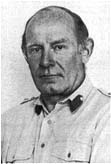
Col W.A.C. (Whacker) Brown
Served with 2LF in Trieste and with 1LF in Cyprus and Osnabruck
Died on Sunday 22nd July 2007


Grave of Captain James Aylett of the British 20th Regiment
Old Athol House Cemetery, Atholville Buried in the Old Athol House Cemetery behind the pulp mill is Captain James Aylett of the 20th Regiment (Lancashire Fusiliers), a decorated veteran of the Crimean War and Indian Mutiny. Aylett was born in India, the son of a British soldier. As was the custom of the time, young James was sent to England for his education and upon completion his father bought him a commission in the British army. During his long service he was stationed with his Regiment in India, England, Ireland, Bermuda, Crimea, Nova Scotia and central Canada. Aylett met his Irish born wife, a Miss Torrent, while in England and married her while stationed in Bermuda. As noted on his grave marker, he saw action in the Crimean battles of Alma, Balaclava, Inkerman and Sebastopol, winning four clasps to his campaign medal and a Turkish decoration. In India, he saw action at the Battles of Chanda, Ameerpore, Sultanpore and Lucknow. Amazingly, throughout it all, he escaped unwounded. When it came time to retired, he opted to return to North America, where he bought 1,000 acres with valuable salmon fishing right on the Restigouche River, four miles from Matapedia. He also received a land grant at Tide Head where he took up farming. According to the 1881 census, Captain Aylett and his family were living in Campbellton. He died in 1882 at the age of 66.

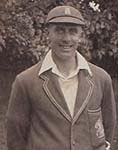
Arthur Edward Robert Gilligan
(1894-1976),
11th Bn Lancashire Fusiliers' and England cricket captain,

was born at Witherhurst, Grove Park, Camberwell, London, on 23 December 1894, the second of three sons (there was also a daughter) of Willie Austin Gilligan (b. 1864), a manager for Liebig's Extract of Meat Co., and his wife, Alice Eliza Kimpton. He attended Fairfield School before entering Dulwich College (1906-14), where he excelled in cricket and athletics. In 1913 all three of the Gilligan brothers played for the Dulwich College cricket eleven; in their subsequent contribution to first-class cricket they were a public-school sporting phenomenon to rival the Lytteltons of Eton, the Fosters of Malvern, and the Ashtons of Winchester. Their father was a member of the committee of the Surrey county club, for whose second eleven Arthur played during his school holidays in 1913 and 1914.

Gilligan's undergraduate career at Pembroke College, Cambridge (1914, 1919-20), was interrupted by war service in France as a captain with the 11th Battalion of the Lancashire Fusiliers. In 1919 he won his cricket blue for Cambridge, ensuring a Cambridge victory by taking six for 52 in Oxford's second innings. It was an outstanding display of fast bowling. A few days earlier, representing Cambridge against Sussex, he had put on 177 in 65 minutes with J. N. Naumann for the last wicket, scoring 101 batting at number eleven. In 1920 he went down from Cambridge to join the firm in which his father had become a senior partner, Gilbert Kimpton & Co., general produce merchants, of Monument Street in the City of London. On 6 April 1921 he married Cecilia Mary, only daughter of Henry Noble Mathews.

Gilligan played three games for Surrey in 1920, but in the following year was registered for Sussex, and represented the county as an amateur for the next ten years. He captained Sussex from 1922 to 1929, producing a strong all-round side known for their attractive play and fine fielding, inspired by his own acrobatic ability in the field at mid-off. Although not noted as a tactician, he was an inspiring captain, who laid emphasis on blooding young talent. During his first year as captain he made great strides as a bowler and took 135 wickets (at 18.75). He was picked for the Gentlemen and toured South Africa with MCC in the winter of 1922-3. In 1923 he performed the 'double' (1000 runs and 100 wickets). He was chosen to captain England in 1924 in the first test at Edgbaston, where he and M. W. Tate combined to bowl out South Africa for 30, with Gilligan taking six for 7. When South Africa followed on he took a further five for 83 to secure an England victory by an innings. Tate and Gilligan became the most feared opening attack of the time, bowling out many of the best sides in the county championship cheaply. At Lord's, Sussex dismissed Middlesex for 41, with Gilligan taking eight for 25.

In Gilligan's period of greatest success disaster struck. When batting for the Gentlemen against the Players at the Oval in July 1924, he was struck by a ball over the heart. Shrugging off his injury, he went on to make 112, but he was seriously hurt and had done himself irreparable damage. He was never able to bowl fast again and became almost a passenger in the MCC team he captained in the following winter in Australia, though his captaincy and fielding remained an inspiration. Although the series was lost, he led England to victory at Melbourne in February 1925, their first victory against Australia since 1912. That effectively was the end of his career as a test cricketer, though he became a selector in 1926 and captained MCC in India the following winter. He retired from the first-class game in 1932 with career figures of 9140 runs (at 20.08) and 868 wickets (at 23.20).

Gilligan became popular as one of the earlier radio commentators on test matches and was a stickler for sporting behaviour. He wrote on cricket regularly for the News Chronicle and was the author of several books on cricket, including an account of the 1954-5 MCC tour of Australia, The Urn Returns. He was president of MCC in 1967-8 and was much sought after as a lecturer and after-dinner speaker. An outstanding golfer, he became president of the English golf union in 1959. He was also a talented skier and met his second wife, Katharine Margaret Fox (1902-1998), whom he married in 1934, in Wengen, his first marriage having ended in divorce. A new stand opened at the Sussex county cricket ground at Hove in 1971 was named in his honour. Gilligan died at his home, Cherry Trees, Tudor Close, Mare Hill, Pulborough, Sussex, on 5 September 1976 and was buried at Stopham, Sussex.

The youngest of the Gilligan brothers, (Alfred Herbert) Harold Gilligan (1896-1978), cricketer, was born at Denmark Hill, London, on 29 June 1896, and educated at Fairfield School and Dulwich College. He was in the Dulwich eleven for three years and captain in 1915. During the First World War, as a pilot in the Royal Naval Air Service, he was the first person to fly over the German fleet at Kiel. After joining his father's firm he went on to have a highly successful career in business as co-director of Carltona. He played cricket for Sussex from 1919 to 1931 and often captained the county in Arthur's absence. He toured South Africa with S. B. Joel's unofficial side in 1924-5 under Lord Tennyson, and replaced his brother, who had to withdraw on health grounds, as captain of MCC in New Zealand (1929-30). An impetuous batsman, who loved to play his strokes, he never quite fulfilled his early promise; he averaged just 17 for Sussex and scored only one century (143 against Derbyshire). His record, however, of playing 70 first-class innings in a season (1923) has never been challenged. In later years he served on the Surrey County Cricket Club committee. On 1 June 1933 he married Marjorie Winifred White; their daughter Virginia married Peter May, captain of Surrey and England. He died at Stroud Common, Shamley Green, Surrey, on 5 May 1978.

The eldest of the Gilligan brothers, Frank William Gilligan (1893-1960), cricketer, was born on 20 September 1893, and was at Fairfield School (1900-1906) and Dulwich College (1906-13) before going on to Worcester College, Oxford (1913-14; 1919-20). He was a captain in the 12th battalion, Essex regiment, during the First World War. After the war he won two cricket blues at Oxford, one as captain, and graduated with honours in English. On 6 August 1921 he married Clara Elizabeth, second daughter of James Brindle of Craven Park, Preston, Lancashire. Between 1919 and 1929 he played seventy-nine matches for Essex, keeping wicket with considerable success and averaging 23.62 with the bat. He was a career schoolmaster and became a housemaster at Uppingham School, where he taught from 1920 to 1935, before taking on the headmastership of Wanganui Collegiate School in New Zealand (1936-54). For his services to education he was appointed OBE in 1955. He died in Wanganui, Wellington, New Zealand, on 4 May 1960.


for his cricket record
Sent in by
Mike Murray


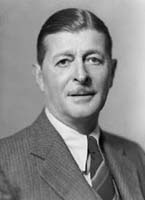
Sir John Gilbert Laithwaite
(1894-1986)

Lancashire Fusilier, civil servant and diplomatist, was born on 5 July 1894 in Dublin, the eldest in the family of two sons and two daughters of John Gilbert Laithwaite, of the Post Office survey, of Dublin, and his wife, Mary, daughter of Bernard Kearney, of Clooncoose House, Castlerea, co. Roscommon. He was educated at Clongowes, whence he won a scholarship to Trinity College, Oxford, of which he became an honorary fellow in 1955. He obtained a second class in both classical honour moderations (1914) and literae humaniores (1916).

During the First World War, Laithwaite served in the front line in France in 1917-18, as a second lieutenant with the 10th Battalion The Lancashire Fusiliers, and was wounded. In 1971 he published (privately printed in Lahore) a record of part of this service in The 21st March 1918: Memories of an Infantry Officer, which includes a lively, detailed account of the German attack at Havrincourt, near Cambrai, on 21 March 1918.

In 1919 Laithwaite was appointed to the India Office, and thus started a long career involved with the subcontinent. He became a principal in 1924 and in 1931 he was specially attached to the prime minister, J. Ramsay MacDonald, for the second Indian round-table conference in London. Two important secretaryships followed, of the Indian franchise (Lothian) committee under R. A. Butler, which toured the subcontinent in 1932, and of the Indian delimitation committee from August 1935 to February 1936. From 1936 to 1943 he was principal private secretary to the viceroy of India, the second marquess of Linlithgow. It was a time of growing political tension following the India Act of 1935 and with provincial autonomy in 1937 imminent. The strains and stresses were greatly increased by the approach of war. Laithwaite gave staunch support to the viceroy and his policies and deserves to share with Linlithgow the credit for ensuring that India's vital role as supply centre for the war effort, as well as a source of military manpower, was quickly and efficiently organized and maintained.

In 1943 Laithwaite returned to England with Linlithgow and was appointed assistant under-secretary of state for India. He was then appointed an under-secretary (civil) of the war cabinet (1944-5) and secretary to the Commonwealth ministerial meeting in London in 1945. As deputy under-secretary of state for Burma in 1945-7, he twice visited Rangoon and had a formative share in the negotiations leading to Burmese independence early in 1948. He was deputy under-secretary of state for India in 1947 and for Commonwealth relations in 1948-9, and he acted as one of the official secretaries of the conference of Commonwealth prime ministers in 1948.

In 1949 Laithwaite became the United Kingdom representative to the Republic of Ireland, a post upgraded to ambassador in 1950. In 1951 he was sent as high commissioner to Pakistan, where he already had friendly relations with members of the government, officials, and other leaders. He steadfastly promoted the British policy of friendship with both India and Pakistan in their disputes over the future of Kashmir and the distribution of the canal waters of the Punjab, and supported the efforts of the United Nations to reconcile the two countries. He left Pakistan in 1954 to be permanent under-secretary of state for Commonwealth relations from 1955 to 1959, first visiting Australia and New Zealand. From 1963 to 1966 he was vice-chairman of the Commonwealth Institute.

Laithwaite was also a governor of Queen Mary College, London, from 1959; president of the Hakluyt Society, 1964-9; vice-president of the Royal Central Asian Society in 1967; president of the Royal Geographical Society, 1966-9; and a member of the Standing Commission on Museums and Galleries from 1959 to 1971. After retirement in 1959 he played an active part in the life of the City as a director of Inchcape and of insurance companies. He was admitted a freeman of the City of London in 1960 and was master of the Tallow Chandlers' Company in 1972-3.

Laithwaite was an industrious and efficient worker, with an impressive grasp of problems and a reputation for fairness. He was rather tall and solidly built, dignified and precise in manner, but exceptionally friendly in a social context, even on first acquaintance, though still with a trace of formality. His outstanding qualities and affability, together with his sense of humour, made him many friends both at home and abroad. His diverse interests included a strong appreciation of fine artefacts and while in India and Pakistan he collected carpets and rugs with discrimination.

Laithwaite came from a Lancastrian Roman Catholic family and adhered devoutly to that faith, which contributed to his success in the embassy in Dublin. In 1960 he was appointed a knight of Malta. He was appointed CIE (1935), CSI (1938), KCIE (1941), KCMG (1948), GCMG (1953), and KCB (1956). Laithwaite was a homosexual and unmarried. He died in London on 21 December 1986.


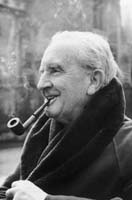
John Ronald Reuel Tolkien, (1892-1973),
Lancashire Fusilier,
writer and philologist

Tolkien, John Ronald Reuel (1892-1973),writer and philologist, was born on 3 January 1892 in Bloemfontein, Orange Free State, the elder son of Arthur Reuel Tolkien (1857-1896) and his wife, Mabel (1870-1904), daughter of John Suffield. His father and mother both came from Birmingham, but Arthur Tolkien had left England in 1889, and by 1892 was manager of the Bloemfontein branch of the Bank of Africa.

Early life and education

J. R. R. Tolkien's early life bears witness to continuing emotional distress and insecurity, coupled with precocious and idiosyncratic intellectual development. His mother returned to England on a visit in 1895 with her two sons (Tolkien's younger brother Hilary was born on 17 February 1894), expecting her husband to join them later. But Arthur Tolkien died of rheumatic fever in Bloemfontein on 15 February 1896, leaving only a few hundred pounds in shares as support for his widow. For a time Mabel Tolkien economized by teaching her sons herself, and by setting up home in the hamlet of Sarehole, now part of the King's Heath suburb of Birmingham but at that time still outside the city. When her elder son, aged eight, passed the entrance examination for King Edward's School, Birmingham, then located in the city centre, she was obliged to move into town, living in one rented house after another. Her financial situation was not eased by her conversion to Roman Catholicism in 1900, which caused an estrangement from some members of her family; and on 14 November 1904 she too died young, of diabetes, leaving her sons as wards of Father Francis Morgan of the Birmingham Oratory. He arranged for the boys to be boarded, first with a distant relative of theirs and then with an acquaintance of his own. But Tolkien experienced a further painful separation when, at the age of sixteen, he fell in love with a fellow lodger, Edith Bratt (1889-1971), daughter of Frances Bratt, of Wolverhampton, a fatherless girl three years older than himself. When his guardian learned of the relationship, the pair were separated and Tolkien was obliged to promise not to communicate with Edith until he came of age-a promise he kept to the letter.

Meanwhile Tolkien's school-life was unusually happy and successful. He had sympathetic teachers, showed special aptitude for languages, and was introduced, or introduced himself, to Old and Middle English, Old Norse, and Gothic. He also formed strong friendships with other members of an unofficial school literary society. In December 1910 he won an exhibition to Exeter College, Oxford, and went up to the university in 1911 to read honour moderations in classics. In 1913 he achieved only a second class, largely because of the time he had spent on Germanic languages outside the syllabus, and was allowed to change to the honours school of English, a large part of which was concerned with linguistic and philological study. Tolkien's tutor was Kenneth Sisam (1887-1971), but he was taught also by the Yorkshire philologist Joseph Wright. He found this course of study much more congenial, and achieved a first in his finals in 1915. He had also, just after midnight on his twenty-first birthday, while on vacation from Oxford, written again to Edith Bratt, the pair becoming engaged very soon after.


War, The Regiment and Academia

Unlike so many of his contemporaries, Tolkien did not rush to join up immediately on the outbreak of war, but returned to Oxford, where he worked hard and finally achieved a first-class degree in June 1915. At this time he was also working on various poetic attempts, and on his invented languages, especially one that he came to call Qenya [sic], which was heavily influenced by Finnish - but he still felt the lack of a connecting thread to bring his vivid but disparate imaginings together. Tolkien finally enlisted as a second lieutenant in the Lancashire Fusiliers whilst working on ideas of Earendel [sic] the Mariner, who became a star, and his journeyings. For many months Tolkien was kept in boring suspense in England, mainly in Staffordshire. Finally it appeared that he must soon embark for France, and he and Edith married in Warwick on 22 March 1916.

Eventually he was indeed sent to active duty on the Western Front where he joined the 11th Battalion as a signals officer. From July to October the regiment took part in the battle of the Somme, including the fighting in the battle's later stages around the Schwaben redoubt. One of Tolkien's closest friends from school was killed at the very start of the battle, on 1 July, and another late in 1916. Tolkien, however, succumbed to trench fever on 27 October, and was returned to England the following month where he spent the next month in hospital in Birmingham. By Christmas he had recovered sufficiently to stay with Edith at Great Haywood in Staffordshire.
During these last few months, all but one of his close friends of the "T. C. B. S." (Tea Club, Barrovian Society, named after their school days meeting place at the Barrow Stores) had been killed in action. Partly as an act of piety to their memory, but also stirred by reaction against his war experiences, he had already begun to put his stories into shape, ". . .. in huts full of blasphemy and smut, or by candle light in bell-tents, even some down in dugouts under shell fire." This ordering of his imagination developed into the Book of Lost Tales (not published in his lifetime), in which most of the major stories of the Silmarillion appear in their first form: tales of the Elves and the "Gnomes", (Deep Elves, the later Noldor), with their languages Qenya and Goldogrin. Here are found the first recorded versions of the wars against Morgoth, the siege and fall of Gondolin and Nargothrond, and the tales of Túrin and of Beren and Lúthien.

Throughout 1917 and 1918 his illness kept recurring, although periods of remission enabled him to do home service at various camps sufficiently well to be promoted to lieutenant. It was when he was stationed at Hull that he and Edith went walking in the woods at nearby Roos, and there in a grove thick with hemlock Edith danced for him. This was the inspiration for the tale of Beren and Lúthien, a recurrent theme in his "Legendarium". He came to think of Edith as "Lúthien" and himself as "Beren". Their first son, John Francis Reuel (later Father John Tolkien) had already been born on 16 November 1917.

When the Armistice was signed on 11 November 1918, Tolkien had already been putting out feelers to obtain academic employment, and by the time he was demobilised he had been appointed Assistant Lexicographer on the New English Dictionary (the "Oxford English Dictionary"), then in preparation. While doing the serious philological work involved in this, he also gave one of his Lost Tales its first public airing - he read The Fall of Gondolin to the Exeter College Essay Club, where it was well received by an audience which included Neville Coghill and Hugo Dyson, two future "Inklings". However, Tolkien did not stay in this job for long. In the summer of 1920 he applied for the quite senior post of Reader (approximately, Associate Professor) in English Language at the University of Leeds, and to his surprise was appointed.

At Leeds as well as teaching he collaborated with E. V. Gordon on the famous edition of Sir Gawain and the Green Knight, and continued writing and refining The Book of Lost Tales and his invented "Elvish" languages. In addition, he and Gordon founded a "Viking Club" for undergraduates devoted mainly to reading Old Norse sagas and drinking beer. It was for this club that he and Gordon originally wrote their Songs for the Philologists, a mixture of traditional songs and orginal verses translated into Old English, Old Norse and Gothic to fit traditional English tunes. Leeds also saw the birth of two more sons: Michael Hilary Reuel in October 1920, and Christopher Reuel in 1924. Then in 1925 the Rawlinson and Bosworth Professorship of Anglo-Saxon at Oxford fell vacant; Tolkien successfully applied for the post.

Professor Tolkien, The Inklings And Hobbits

In a sense, in returning to Oxford as a Professor, Tolkien had come home. Although he had few illusions about the academic life as a haven of unworldly scholarship (see for example Letters 250), he was nevertheless by temperament a don's don, and fitted extremely well into the largely male world of teaching, research, the comradely exchange of ideas and occasional publication. In fact, his academic publication record is very sparse, something that would have been frowned upon in these days of quantitative personnel evaluation.
However, his rare scholarly publications were often extremely influential, most notably his lecture "Beowulf, the Monsters and the Critics". His seemingly almost throwaway comments have sometimes helped to transform the understanding of a particular field - for example, in his essay on "English and Welsh", with its explanation of the origins of the term "Welsh" and its references to phonaesthetics (both these pieces are collected in The Monsters and the Critics and Other Essays, currently in print). His academic life was otherwise largely unremarkable. In 1945 he changed his chair to the Merton Professorship of English Language and Literature, which he retained until his retirement in 1959. Apart from all the above, he taught undergraduates, and played an important but unexceptional part in academic politics and administration.

His family life was equally straightforward. Edith bore their last child and only daughter, Priscilla, in 1929. Tolkien got into the habit of writing the children annual illustrated letters as if from Santa Claus, and a selection of these was published in 1976 as The Father Christmas Letters. He also told them numerous bedtime stories, of which more anon. In adulthood John entered the priesthood, Michael and Christopher both saw war service in the Royal Air Force. Afterwards Michael became a schoolmaster and Christopher a university lecturer, and Priscilla became a social worker. They lived quietly in the North Oxford suburb of Headington.
However, Tolkien's social life was far from unremarkable. He soon became one of the founder members of a loose grouping of Oxford friends, (by no means all at the University), with similar interests, known as "The Inklings". The origins of the name were purely facetious - it had to do with writing, and sounded mildly Anglo-Saxon; there was no evidence that members of the group claimed to have an "inkling" of the Divine Nature, as is sometimes suggested. Other prominent members included the above-mentioned Messrs Coghill and Dyson, as well as Owen Barfield, Charles Williams, and above all C. S. Lewis, who became one of Tolkien's closest friends, and for whose return to Christianity Tolkien was at least partly responsible. The Inklings regularly met for conversation, drink, and frequent reading from their work-in-progress.

The Storyteller

Meanwhile Tolkien continued developing his mythology and languages. As mentioned above, he told his children stories, some of which he developed into those published posthumously as Mr. Bliss, Roverandom, etc. However, according to his own account, one day when he was engaged in the soul-destroying task of marking examination papers, he discovered that one candidate had left one page of an answer-book blank. On this page, moved by who knows what anarchic daemon, he wrote "In a hole in the ground there lived a hobbit".
In typical Tolkien fashion, he then decided he needed to find out what a Hobbit was, what sort of a hole it lived in, why it lived in a hole, etc. From this investigation grew a tale that he told to his younger children, and even passed round. In 1936 an incomplete typescript of it came into the hands of Susan Dagnall, an employee of the publishing firm of George Allen and Unwin (merged in 1990 with HarperCollins). She asked Tolkien to finish it, and presented the complete story to Stanley Unwin, the then Chairman of the firm. He tried it out on his 10-year old son Rayner, who wrote an approving report, and it was published as The Hobbit in 1937. It immediately scored a success, and has not been out of children's recommended reading lists ever since. It was so successful that Stanley Unwin asked if he had any more similar material available for publication.

By this time Tolkien had begun to make his Legendarium into what he believed to be a more presentable state, and as he later noted, hints of it had already made their way into The Hobbit. He was now calling the full account Quenta Silmarillion, or Silmarillion for short. He presented some of his "completed" tales to Unwin, who sent them to his reader. The reader's reaction was mixed: dislike of the poetry and praise for the prose (the material was the story of Beren and Lúthien) but the overall decision at the time was that these were not commercially publishable. Unwin tactfully relayed this messge to Tolkien, but asked him again if he was willing to write a sequel to The Hobbit. Tolkien was disappointed at the apparent failure of The Silmarillion, but agreed to take up the challenge of "The New Hobbit".
This soon developed into something much more than a children's story; for the highly complex 16-year history of what became The Lord of the Rings consult the works listed below. Suffice it to say that the now adult Rayner Unwin was deeply involved in the later stages of this opus, dealing magnificently with a dilatory and temperamental author who, at one stage, was offering the whole work to a commercial rival (which rapidly backed off when the scale and nature of the package became apparent). It is thanks to Rayner Unwin's advocacy that we owe the fact that this book was published at all - Andave laituvalmes! His father's firm decided to incur the probable loss of £1,000 for the succès d'estime, and publish it under the title of The Lord of the Rings in three parts during 1954 and 1955, with USA rights going to Houghton Mifflin. It soon became apparent that both author and publishers had greatly underestimated the work's public appeal.

The "Cult"

The Lord of the Rings rapidly came to public notice. It had mixed reviews, ranging from the ecstatic (W. H. Auden, C. S. Lewis) to the damning (E. Wilson, E. Muir, P. Toynbee) and just about everything in between. The BBC put on a drastically condensed radio adaptation in 12 episodes on the Third Programme. In 1956 radio was still a dominant medium in Britain, and the Third Programme was the "intellectual" channel. So far from losing money, sales so exceeded the break-even point as to make Tolkien regret that he had not taken early retirement. However, this was still based only upon hardback sales.

The really amazing moment was when The Lord of the Rings went into a pirated paperback version in 1965. Firstly, this put the book into the impulse-buying category; and secondly, the publicity generated by the copyright dispute alerted millions of American readers to the existence of something outside their previous experience, but which appeared to speak to their condition. By 1968 The Lord of the Rings had almost become the Bible of the "Alternative Society".

This development produced mixed feelings in the author. On the one hand, he was extremely flattered, and to his amazement, became rather rich. On the other, he could only deplore those whose idea of a great trip was to ingest The Lord of the Rings and LSD simultaneously. Arthur C. Clarke and Stanley Kubrick had similar experiences with 2001- A Space Odyssey. Fans were causing increasing problems; both those who came to gawp at his house and those, especially from California who telephoned at 7 p.m. (their time - 3 a.m. his), to demand to know whether Frodo had succeeded or failed in the Quest, what was the preterite of Quenyan lanta-, or whether or not Balrogs had wings. So he changed addresses, his telephone number went ex-directory, and eventually he and Edith moved to Bournemouth, a pleasant but uninspiring South Coast resort (Hardy's "Sandbourne"), noted for the number of its elderly well-to-do residents.

Other Writings

Despite all the fuss over The Lord of the Rings, between 1925 and his death Tolkien did write and publish a number of other articles, including a range of scholarly essays, many reprinted in The Monsters and the Critics and Other Essays (see above); one Middle-earth related work, The Adventures of Tom Bombadil; editions and translations of Middle English works such as the Ancrene Wisse, Sir Gawain, Sir Orfeo and The Pearl, and some stories independent of the Legendarium, such as the Imram, The Homecoming of Beorhtnoth Beorhthelm's Son, The Lay of Aotrou and Itroun - and, especially, Farmer Giles of Ham, Leaf by Niggle, and Smith of Wootton Major.
The flow of publications was only temporarily slowed by Tolkien's death. The long-awaited Silmarillion, edited by Christopher Tolkien, appeared in 1977. In 1980 Christopher also published a selection of his father's incomplete writings from his later years under the title of Unfinished Tales of Númenor and Middle-earth. In the introduction to this work Christopher Tolkien referred in passing to The Book of Lost Tales, "itself a very substantial work, of the utmost interest to one concerned with the origins of Middle-earth, but requiring to be presented in a lengthy and complex study, if at all" (Unfinished Tales, p. 6, paragraph 1).
The sales of The Silmarillion had rather taken George Allen & Unwin by surprise, and those of Unfinished Tales even more so. Obviously, there was a market even for this relatively abstruse material and they decided to risk embarking on this "lengthy and complex study". Even more lengthy and complex than expected, the resulting 12 volumes of the History of Middle-earth, under Christopher's editorship, proved to be a successful enterprise. (Tolkien's publishers had changed hands, and names, several times between the start of the enterprise in 1983 and the appearance of the paperback edition of Volume 12, The Peoples of Middle-earth, in 1997.)

Conclusion

After his retirement in 1959 Edith and Ronald moved to Bournemouth. On 22 November 1971 Edith died, and Ronald soon returned to Oxford, to rooms provided by Merton College. Ronald died on 2 September 1973. He and Edith are buried together in a single grave in the Catholic section of Wolvercote cemetery in the northern suburbs of Oxford. (The grave is well signposted from the entrance.) The legend on the headstone reads:
Edith Mary Tolkien, Lúthien, 1889-1971
John Ronald Reuel Tolkien, Beren, 1892-1973


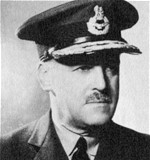
Lionel Evely Oswald Charlton,
(1879-1958),

Charlton, Lionel Evelyn Oswald (1879-1958), air force officer and author, was born at 28 Half Moon Street, Piccadilly, London, on 7 July 1879, the third of the four sons of William Oswald Charlton (1850-c.1896), a diplomatist from Hesleyside, Northumberland, and his American wife, Mary Grant Campbell (d. 1928). From 1882 until 1884 he lived with his parents in Washington, DC, where his father worked at the British legation. Back in England the family stayed in Clifton, Bristol, before moving to Northumberland. Shortly before his eighth birthday Charlton went to a Catholic boarding-school in Birmingham, which then moved to Weston-super-Mare. In Lent term 1893 he entered Brighton College as a day boy, where he gained a special prize in German and, with his older brother Archibald (1877-1952), played house football. In December 1894 he left for a military crammer near Leatherhead.

Shortly after his father's death, in January 1897 Charlton entered the Royal Military College, Sandhurst, where he indulged in 'a minimum of earnest endeavour and a maximum of pleasure-seeking' (Charlton, Charlton, 54) but became a second lieutenant in the Lancashire Fusiliers on 28 September 1898. In summer 1899 the regiment went to Crete, where Charlton received the bronze medal of the Royal Humane Society for saving a man from drowning. He advanced to lieutenant on 1 September 1899. During the South African War he took part in the relief of Ladysmith and the Spion Kop battle (23-5 January 1900), where he was wounded. Having been confined to hospital for two months, he returned to his regiment and was seconded to the imperial yeomanry; he secured a squadron command as temporary captain on 17 April 1901. After action in Natal, the Transvaal, Cape Colony, and Orange River Colony, for a short period he was governor of the town and district of Petrusville. He was mentioned in dispatches, gained the queen's medal with five clasps, the king's medal with two clasps, and, for his bravery at Spion Kop, the DSO. Charlton advanced to substantive captain on 5 October 1901, ended the war in hospital after being wounded again, and left the imperial yeomanry on 23 September 1902.

Bored with peacetime soldiering, Charlton joined the Gold Coast regiment in the West African frontier force on 13 December 1902, where scant professional activity left him time to read books of poetry, history, and religious criticism. While acting as civil commissioner at Kintampo, following several severe bouts of dysentery, in autumn 1907 he was invalided home. Following recuperation, he rejoined his regiment in Ireland. Then, on 29 April 1908, he became aide-de-camp to the governor of the Leeward Islands. The following year was 'a period of intense happiness such as he had not yet known' (Charlton, Charlton, 170). However, anxious to further his career, he left on 18 April 1909, only to find army routine in Ireland dreary. Having volunteered to take a draft to India, he remained to learn Urdu before returning to the regimental depot, where he successfully passed the army Staff College examination. At Camberley in 1910, outspoken criticisms of the institution and 'doctrinal methods of instruction' (Charlton, Charlton, 208) were discouraged, and his final report, on leaving the college in 1912, was tepid.

Meanwhile, Charlton had privately taken lessons at Brooklands Flying School, and as a result in January 1914 attended the Royal Flying Corps (RFC) central flying school, where, as well as aerial manoeuvres, he learned to strip and assemble engines. After completing the course he was seconded to the RFC and, at the outbreak of war, flew to France. On 22 August 1914, close to Moerbeke in Belgium, he spotted from the air General von Kluck's German columns threatening to isolate the British expeditionary force. Charlton became temporary major as a squadron commander on 16 September 1914, but two months later a crash on landing put him in hospital for six weeks. Following a brief spell at South Farnborough he returned to France, and on 1 September 1915 advanced to substantive major. Appointed temporary general staff officer, grade 1, and temporary lieutenant-colonel in the department of the director-general of aeronautics in London on 18 August 1915, he became brevet lieutenant-colonel on 19 March 1916. He advanced to brevet colonel on 1 January 1917 and temporary brigadier-general on 28 February 1917, and took command of an RFC brigade in France on 18 October 1917, his squadrons supporting the British Fifth Army during the 'disaster' of the German advance in March 1918 and the Fourth Army in its 'triumphant progress' before Armistice day (Charlton, More Charlton, 102). With the formation of the RAF on 1 April 1918, Charlton appeared as substantive lieutenant-colonel and temporary brigadier-general. He was appointed CMG in 1916 and CB in 1919 and received the French Légion d'honneur.

On 19 February 1919 Charlton was made air attaché to the USA, and on 5 August he became air commodore. He oversaw the arrival and departure of the transatlantic airship R34, helped to organize the prince of Wales's tour of the eastern United States, and flew in the New York to San Francisco air race. He deplored the proceedings of the International Disarmament Conference of 1921 as 'in reality … a subtle game of grab' (Charlton, More Charlton, 265). He departed from Washington on 1 May 1922. Following leave and a short time commanding south-west area at Andover, on 2 February 1923 he became chief staff officer to the RAF commander in Iraq. He soon felt disillusioned with the policy of imperial policing, 'aghast to learn … that an air bomb in Iraq was, more or less, the equivalent of a police truncheon at home' (ibid., 270). The attempt to control dissident peoples by dropping bombs on them Charlton found morally reprehensible and professionally unacceptable. His resignation was accepted, but in England the chief of the air staff told him there would be no official inquiry into his misgivings. Referring to this 'little kink of conscience', Air Chief Marshal Sir Hugh Trenchard observed that 'he seemed rather hurt that he was not on a pedestal' (Boyle, 511).

On annual half pay of under £400, Charlton lived in Bayonne before taking over 3 inland group at Spittlegate, Grantham, on 7 March 1924. By now he had developed a revulsion to blood sports and recreational shooting, preferring tennis and gardening, and acquired an interest in socialism. On 10 December 1924 he went to the Air Ministry to undertake a study of RAF expansion in the event of war. Hoping for promotion and advancement, he was advised to expect neither. Officially he retired from the RAF on 1 April 1928, but Charlton wrote of 'the blow of his dismissal' (More Charlton, 3). In 1926 a friend bequeathed him £3000; shortly afterwards his mother died, and, after tax, his pension amounted to some £700 per year. So he was not poor. In April 1928 he bought Tisselcot, near Esher in Surrey, for £1425. Every year, though, he went to Northumberland to spend time with two of his brothers and their families.

In November 1928 Charlton travelled to Mexico to promote British aviation, which led to a programme on the BBC, further radio talks, and discussion panels. After leaving the RAF he began writing book reviews and progressed to influential books on air power. In War over England (1936) he speculated that eighteen German bombers could destroy much of the RAF during its annual Hendon air display, and War from the Air (1938) forecast heavy civilian casualties from massive air raids; The Menace of the Clouds (1937) highlighted the wider potential of aircraft. It has been argued that Charlton 'should bear the primary responsibility for creating the myth of the invincibility of air power' (Smith, 84)-a harsh judgement, as he was not unique in believing that bombers would be decisive in the next war. Indeed, RAF doctrine based on this concept predated the 1930s debate. He later compiled chronological surveys of RAF and United States Army Air Force bombing during the Second World War.

Charlton produced, too, a range of non-military volumes: A Hausa Reading Book (1908), drawing on his time in west Africa, an edited work, The Recollections of a Northumbrian Lady (1949), the memoirs of his paternal grandmother, and two historical works, The Taking of Quebec (1941) and The Military Situation in Spain after Teruel (1938). He also published ten children's adventure stories, two descriptive accounts of flying achievements, one instructional book, The Hemps of Agrimony (1935), a polemic against hunting, This Cruelty called Sport (1939), and two strange autobiographies in the third person, Charlton (1931) and More Charlton (1940). He contributed articles on aviation to newspapers and spoke widely on air power, including four Lees Knowles lectures at Cambridge University.

After moving to Maida Vale, London, in 1934, his socialist beliefs led Charlton to serve on the advisory council of the Union of Friendship with the USSR and to sympathize with republicans during the Spanish Civil War. He appeared on newsreels both to warn against the danger of air attacks on London and in his capacity as chairman of the League for the Prohibition of Cruel Sports. In 1936 he gave evidence to the subcommittee of the committee of imperial defence considering the vulnerability of capital ships to air attack. In 1938 Charlton moved to Dover, and later he lived at Charlton House in Tarset, Hexham. He died in Hexham General Hospital from cancer of the colon on 18 April 1958, and his body was subsequently cremated. He never married. The Times termed him 'an outspoken air strategist … [who] lived his life to the full doing nothing by halves … He was not the introspective type nor was he ever in much doubt about the soundness of his deductions'(21 April 1958).


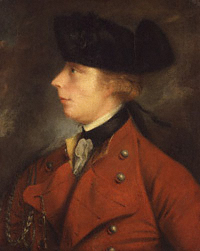
James Wolfe,

Wolfe, James (1727-1759), army officer, was born at the vicarage, Westerham, Kent, on 2 January 1727, the elder of two sons of Lieutenant-General Edward Wolfe (1685-1759) and his wife, Henrietta (d. 1764), the daughter of Edward Thompson of Long Marston, Yorkshire. He was born into a family of professional soldiers. His great-grandfather is traditionally said to have been a Catholic officer named George Woulfe, who helped to defend Limerick in 1651. It is, however, much more likely that he was actually descended from a parliamentarian officer, Lieutenant-Colonel Edward Wolfe, of Henry Ireton's regiment, who died at Youghal in 1649. Although James's grandfather, also named Edward, served in the Irish regiment of foot guards, until dismissed in a purge of protestant officers, he evidently came from Yorkshire, for James's father, Lieutenant-General Edward Wolfe, was certainly born in York in 1685 and married Henrietta Thompson there in 1724. First commissioned as a second lieutenant of marines on 10 March 1702, Edward Wolfe was appointed major of Sir Richard Temple's foot just eight years later, on 24 April 1710, and then a captain and lieutenant-colonel in the 3rd (Scots) foot guards, on 10 July 1717. Notwithstanding his being dismissed by Ernest Marsh Lloyd in the Dictionary of National Biography as having 'no great force of character', this achievement argues for some considerable ability and easily bears comparison with his son's early career. More than twenty years of peace followed but in 1739 he received command of the newly raised 1st marines and was subsequently appointed adjutant-general of an expeditionary force sent to Carthagena in 1740. He then received the colonelcy of the 8th foot on 25 April 1745 and was successively promoted major general on 27 May 1745 and then lieutenant general on 20 September 1747. He died just six months before his son, on 26 March 1759. Unsurprisingly it was assumed from the outset that James Wolfe also would be a soldier.
Early career
In 1740 Wolfe accompanied his father to the Isle of Wight. Ostensibly he was to serve as a volunteer but when the Carthagena expedition finally sailed James was set ashore and left behind. Nevertheless he was eventually commissioned second lieutenant in his father's 1st marines, on 3 November 1741. As the regiment was still in the West Indies, Wolfe remained at home until his exchange into Colonel Scipio Duroure's 12th foot, on 27 March 1742. This exchange had probably been arranged some time earlier, since Duroure's predecessor in command of the 12th foot, Thomas Whetham, had been married to the then Colonel Edward Wolfe's sister-in-law. A month after James joined the regiment the 12th foot was ordered to Flanders and he spent the next eight months in quarters at Ghent, learning the rudiments of his profession. It appears to have been a lonely time, for he was much younger than most of his fellow officers, but his keenness evidently impressed his superiors, for when the 12th foot marched into Germany in the following year he was appointed acting adjutant-an important post with considerable responsibility for regimental administration, discipline, and training. He and his younger brother, Edward (b. 1728), who also had been commissioned in the 12th foot, saw action for the first time in the battle of Dettingen on 27 June 1743. There he and the regiment's acting commander, Major John Cossley, 'were employed in begging and ordering the men not to fire at too great a distance, but to keep it until the enemy should come near us, but to little purpose'. Wolfe also had a borrowed horse shot from under him during the battle and afterwards was prostrated for some days 'very much out of order' with what may have been exhaustion but was more likely a form of post-traumatic stress syndrome. At the same time, however, he came to the notice of William Augustus, duke of Cumberland, and 'had several times the honour of speaking with him just as the battle began' (Life and Letters, 21 June 1743). This meeting was significant, for Wolfe's subsequent rapid promotion was facilitated to a remarkable degree by Cumberland's active patronage. On 13 July 1743 he was confirmed adjutant of the 12th foot and promoted to a vacant lieutenancy in the same regiment the next day. Little more than a year later he transferred to the 4th foot as a captain, on 23 June 1744. The subsequent campaign in Flanders under the aged and ineffective Field Marshal George Wade proved a frustrating experience, and in October of that year Wolfe's brother died, apparently from tuberculosis. Misled by optimistic reports as to Edward's condition, Wolfe arrived at his bedside too late but afterwards wrote an extremely moving letter to his parents. On 12 June of the following year, however, Cumberland, now in command of the allied forces, signed Wolfe's commission as major of brigade in Flanders. He held this responsible staff appointment for the next three years.
Having missed the battle of Fontenoy, Wolfe was suddenly ordered home when the Jacobite rising broke out in Scotland. Following Sir John Cope's defeat at Prestonpans on 21 September eight battalions, led by William Anne Keppel, second earl of Albemarle, were ordered from Flanders to Newcastle upon Tyne. Sailing on 13 October the convoy was scattered by a gale, but Wolfe had certainly reached Newcastle by the beginning of November, where initially he was once again assigned to the army of Field Marshal Wade. Once again it was a frustrating experience, for the old man signally failed both to prevent the rebel incursion into England and to co-operate effectively with other government forces. To the relief of all concerned, eventually Wade was superseded by Lieutenant General Henry Hawley, and the army moved up to Edinburgh at the end of December 1745. Wolfe's personal role in the battle of Falkirk on 17 January 1746 is unclear but in a letter written three days later he stoutly rebutted popular reports of a disaster and insisted that 'we are now making all necessary preparations to try once more to put an end to this rebellion' (Life and Letters, 20 Jan 1746). As part of those preparations the duke of Cumberland assumed command on 30 January, and Wolfe was appointed to General Hawley's staff as an extra aide-de-camp. While serving as such he was involved in an odd little incident at Aberdeen, when his general confiscated the household goods of their involuntary host, a Mrs Gordon of Halhead. As Mrs Gordon's husband was serving in a rebel cavalry unit at the time there was some slight justification for doing so but the incident is perhaps notable for affording the earliest known impression of Wolfe by an outsider-the somewhat partisan Mrs Gordon finding him rude, facetious, and high-handed. On 16 April 1746 Wolfe took part in the battle of Culloden Moor and, as Hawley's aide-de-camp, would have been involved in the flanking march by the cavalry that brought them into the rear of the rebel army. There they halted, and although he said little about it at that time Wolfe was afterwards critical of Hawley's failure to fight his way across a heavily defended re-entrant to complete the victory. Popular legend afterwards associates Wolfe with a well known incident on the battlefield where he was allegedly ordered by Cumberland to shoot a wounded Jacobite officer, Charles Fraser of Inverallochie. On Wolfe's refusing, according to Mr Steuart of Allantoun in an 1802 article published in the Anti-Jacobin Review, he 'from that day declined in the duke's favour' (Forbes, 3.56). However, the original version of the story, as related by a local minister named James Hay, merely refers to 'one officer of distinction and then another' (ibid.) being ordered to shoot Inverallochie, and it is unlikely that the young Wolfe would then have been included among their number. His much later transformation into the principal actor in the story may in fact be related to the fact that a Highland regiment (Fraser's 78th foot) largely commanded by former Jacobites, including Inverallochie's son, later served under him at Quebec.
After Culloden, Wolfe served on in Scotland, initially on the staff and later with his company of the 4th foot at Inversnaid, until recalled to Flanders in late November. Granted six weeks' leave first, he entered into negotiations to buy out Major Thomas Lacy of the 33rd foot, and although the promotion was recorded in the relevant commission and notification books as taking effect from 5 February 1747 it ultimately proved abortive, probably because Wolfe's father was unable to advance him the money. This was doubly unfortunate, for on 9 May Cumberland-apparently assuming that the purchase was still to proceed-recommended that Wolfe should also be allowed to purchase the vacant lieutenant-colonelcy of his father's 8th foot. However, without having first obtained the substantive regimental rank of major he was unable to do so and consequently returned to the continent still a captain. There he served as major of brigade to Sir John Mordaunt and was badly wounded at the battle of Laffeldt on 21 June. Shot through the body, he was first taken to hospital, then returned home until the following March, when he was appointed major of brigade to Major-General Thomas Fowke.
Battalion commander
In April, Cumberland again tried to engineer Wolfe's promotion, and as Wolfe explained to his father:
as a secret, [Colonel Yorke] told me H. R. H. intended … that he would give me the Major's commission of Bragg's [28th] regiment for nothing, and (as he was pleased to say) in order to my being Lieutenant Colonel of it, for Jocelyn is dying. (Life and Letters, 12 April 1748)
Unfortunately this scheme also failed but, as a result of some equally complicated manoeuvring by Cumberland, Wolfe eventually became major of Lord George Sackville's 20th foot, on 5 January 1749. At the same time the regiment's lieutenant colonel, Edward Cornwallis, was posted to Nova Scotia in the expectation that he would soon succeed the dying Richard Phillips as colonel of the 40th foot. As a result Wolfe was at once placed in day-to-day command of the 20th foot, with the imminent prospect of becoming lieutenant colonel, without purchase, in succession to Edward Cornwallis. Wolfe, however, was far from satisfied. The regiment was then stationed in Glasgow and as the only field officer actually on duty with the regiment he was forbidden to take any leave. Consequently he complained to his old friend William Rickson: 'I am by no means ambitious of command when that command obliges me to reside far from my own, surrounded either with flatterers or spies and in a country not at all to my taste'. In the event Cornwallis did not succeed Phillips until over a year later and by that time George Keppel, Viscount Bury, had replaced Sackville as colonel of the 20th foot. Initially relations between Wolfe and his new colonel were far from cordial and there was some uncertainty as to whether he would indeed become lieutenant colonel of the regiment, but at the determined instigation of his patron, Cumberland, he was promoted on 20 March 1750.
Notwithstanding the fact that there were now two field officers with the regiment Wolfe was still denied leave. Although he complained that he only wanted the opportunity to study abroad he also had considerable personal problems at this time. While recovering from his Laffeldt wound late in 1747 he met Elizabeth Lawson, a niece of his brigade commander, Sir John Mordaunt, but his parents disapproved of the match and during his enforced absence in Scotland she lost interest in him. Wolfe evidently had some difficulty in accepting this fact and when he finally obtained leave in November 1750 he had a serious falling out with his parents, was decisively rejected by the lady, and proceeded to drown his sorrows in a prolonged bout of dissipation. As he related to Rickson: 'I committed more imprudent acts than in all my life before. I lived in the idlest, dissolute, abandoned manner that could be conceived, and that not out of vice, which is the most extraordinary part of it' . Reconciled at the end of it with his parents, he returned to Scotland in April 1751, this time serving in the highlands, where he revisited the battlefield of Culloden, developed a taste for deerstalking, seems to have been bemused by meeting several Jacobite families on civil if not cordial terms, and failed to capture a noted Jacobite fugitive, Euan Macpherson of Cluny. Nevertheless he was still anxious to go abroad in order to complete his military education but in the following year his leave was again confined to Great Britain, a restriction that he interpreted as broadly as he dared by visiting his uncle Major Walter Wolfe in Dublin. There he also met the unnamed widow of an officer who had been killed at Fontenoy, and the close nature of their relationship is evident from the fact that she would later be lampooned by George Townshend as Wolfe's 'Irish Venus'. In October 1752 he was at last allowed to travel to Paris, where Lord Bury's father, the earl of Albemarle, was British ambassador. However, his hopes of visiting the various continental armies in the summer were dashed by the illness and sudden death of Major Thomas Hart in March 1753. Bury was extremely apologetic about recalling Wolfe to take charge of the 20th Regiment, for he, like many other of his contemporaries, had developed a considerable respect for Wolfe's abilities and the efficient way in which he was running the regiment.
Tactical theories
In fact a compilation of Wolfe's regimental orders from this period, proudly cherished by the Lancashire Fusiliers, would be posthumously published as General Wolfe's Instructions to Young Officers (1768; 2nd edn, 1780). Those tactical instructions that he prepared for the use of the regiment, in anticipation of a French invasion, in December 1755 are particularly interesting but in the longer term his improvements to both firing and bayonet drills were to be of far greater significance. At this time the British army employed a technique known as platoon firing, or platooning, whereby an infantry battalion was told off into a number of ad hoc platoons at the outset of an engagement. These platoons then fired in a carefully choreographed sequence so devised to ensure, in theory at least, that a constant fire was maintained upon the enemy. Practical experience in the 1740s, and particularly during the Jacobite rising, had revealed a number of shortcomings with the technique, and when in de facto command of the 20th foot Wolfe introduced a much simpler alternate system, based on Prussian practice. At the same time he also replaced the original bayonet drill, which had been based on pike-handling techniques of 100 years earlier. Instead of levelling the bayonet shoulder high, as illustrated in David Morier's well-known painting of Culloden, he directed it to be levelled at the hip, in the Prussian manner, thus converting it from a defensive to an offensive weapon. Noting an interest by French writers in mounting column attacks he proposed countering them with massed battalion volleys followed by an immediate bayonet charge-a technique that he was to employ with spectacular effect at Quebec in 1759. The earliest illustrations of Wolfe's bayonet drill and other reforms, as practised by his own 67th foot and that of his protégé Charles Lennox, third duke of Richmond-the 72nd foot-are published without acknowledgement in William Windham's A Plan of Discipline, Composed for the Use of the Militia of the County of Norfolk (1759 and numerous subsequent editions). Wolfe's alternate firing and bayonet drill was subsequently incorporated in the official 1764 regulations and thus provided the foundation of British infantry tactics in the American War of Independence and into the Napoleonic wars as well. Nevertheless though Wolfe's improvements were eagerly embraced by the younger generation of officers they incurred the considerable displeasure of the duke of Cumberland. Obsessed with the entirely laudable aim of enforcing a uniform system of drill in the army the duke was firmly opposed to innovations in this field, and in 1757 actually issued a general order deploring the fact that the official regulations 'are changed according to the Whim & Supposed Improvements of every fertile Genius.' While these orders were particularly directed to Sir John Mordaunt there is no doubt that the 'fertile Genius' complained of was the duke's former protégé James Wolfe.
Rochefort
Wolfe had been declining in Cumberland's favour for some time, not because of that apocryphal incident on Culloden Moor but as a result of his constant importuning to be allowed to take leave. Having been at some pains to place Wolfe in charge of a battalion the duke was understandably upset by his eagerness to get away from it, and moreover Wolfe also appears to have been somewhat indiscreet in his expressions of frustration and disappointment. Consequently his hopes of succeeding to the colonelcy of the 20th foot when it successively became vacant in April 1755 and May 1756 were also disappointed but on 29 March 1757 he accepted the post of Quartermaster General in Ireland. This was a sinecure in the gift of the lord lieutenant, John Russell, fourth duke of Bedford, and quite outside Cumberland's sphere of influence. It was also, as Wolfe candidly admitted to his father, 'quite out of the course of my practise' (Life and Letters, 6 Feb 1757) but he hoped thereby to obtain the rank of full colonel that normally went with it. This, however, was refused on account of his youth; instead he was taken onto the staff of Sir John Mordaunt, who was then preparing an expeditionary force for a heavy raid on the French coast, aimed at seizing Rochefort. This provided Wolfe with an opportunity to spread his radical tactical theories, which were enthusiastically taken up by the officers assembled for the expedition. It was news of this that prompted Cumberland's letter of rebuke, but Wolfe's career did not suffer thereby, for the duke himself was under a cloud. Having been defeated by the French at Hastenbeck, outside Hameln, on 26 July he surrendered a week later at Kloster Zeven and was compelled by George II to resign as Captain General on 14 October. In the meantime the Rochefort expedition had sailed on 6 September, but although a landing was successfully effected on the Île d'Aix on 23 September the operation then collapsed in a welter of indecision. Wolfe returned, disgusted, but remarked to Rickson: 'I am not sorry that I went, notwithstanding what has happened; one may always pick up something useful from amongst the most fatal errors.' He then proceeded to set out an extremely constructive critique of combined operations, and there is no doubt that the experience did indeed serve him well in his own operations against Quebec. Like the future duke of Wellington in the 1794 campaign he had 'learned what not to do'. Rather more encouragingly he emerged from the inquiry into the Rochefort fiasco with some credit and, just a week after Sir John Ligonier succeeded Cumberland as commander-in-chief, he at last obtained the brevet rank of colonel, on 21 October 1757, which, as he wrote to his father, 'at this time is more to be prized than any other, because it carries with it a favourable appearance as to my conduct upon this late expedition.' What was more, at the same time he also received command of the 2nd battalion of the 20th Foot, and his colonel's rank became substantive six months later, when the battalion became the 67th foot on 21 April 1758.
Louisburg
As a further mark of Ligonier's confidence Wolfe had also been granted a local commission as brigadier general in North America, on 23 January 1758. Although this meant that he had to relinquish his post as Quartermaster General in Ireland he looked forward to service in America with some enthusiasm. He was in fact to be one of three brigadiers serving under Major General Jeffrey Amherst in an expeditionary force intended to capture the fortress of Louisburg on Cape Breton Island. As usual Wolfe found much to criticise both in the preparations and in his colleagues, and rather characteristically he and the senior brigadier, Charles Lawrence, had no compunction in sailing from Halifax without waiting for Amherst. He for his part was understandably surprised to arrive there just in time to meet the fleet coming out of the harbour but lost no time in insisting that the landing should take place at Gabarus Bay, just to the south of Louisburg, in spite of Wolfe's advice. Nevertheless Wolfe greatly distinguished himself during the landing on 8 June. His 'division' comprised twelve companies of grenadiers, a battalion assembled from light infantry and New England rangers, and Simon Fraser's 78th Highlanders. On approaching the designated landing place at Freshwater Cove, Wolfe's boats came under heavy fire and initially it appeared that the operation would have to be aborted. Then a section of the light infantry got ashore in some dead ground; Wolfe followed and with just a cane in his hand led a bayonet charge that rolled up the flank of the French defences. British losses amounted to forty-six killed and fifty-nine wounded-most of them drowned when their boats were sunk-but the result was that the army got ashore and Louisburg was besieged. Wolfe unquestionably enjoyed that siege. Given command of a brigade comprising four companies of grenadiers, three of New England rangers, some light infantry, and detachments from every regiment in the army except the 28th foot, he was ordered to seize the village of L'Orembec and, using it as a base, to approach the town from the east. Having established a battery at Lighthouse Point he first inflicted substantial damage on the French shipping still in the harbour and then commenced operations against the town's Dauphin Gate.
Wolfe's reports to Amherst during this period reveal him revelling in what was effectively an independent command. There is a notable absence of the frustration and the chronic grumbling and complaining that characterise so much of his peacetime correspondence. He establishes routines, organises reliefs, raises battery after battery, even persuades the regimental women to help drag the siege guns into position, and throughout it all cheerfully bombards his commander with information and unwanted advice. Even the inevitable setbacks are lightly dismissed and, as he wrote on 20 July, 'notwithstanding such difficulties I shall persevere till we demolish these gentlemen' (Life and Letters, 20 July 1758). Demolish them he did and shortly after Wolfe opened a breach by the Dauphin Gate the French surrendered, on the morning of 27 July. With the town in British hands Wolfe assumed that Amherst would move at once on Quebec. In this, however, he was to be intensely disappointed, for even if Amherst had been a more dynamic commander it was too late in the year to commence operations up the St Lawrence. In any case news arrived almost at once of a disaster on the New York frontier, where General James Abercromby had been badly beaten by the French at Ticonderoga. On learning of this Wolfe initially volunteered to take a brigade to New York but just as abruptly changed his mind and was then disgusted to be sent off instead on what he regarded as a pointless raid on Gaspé at the mouth of the St Lawrence. In the meantime, however, Amherst had himself sailed for New York and, taking advantage of his departure, Wolfe absconded for home.
The river command
Wolfe's correspondence reveals that he had some hopes of serving in Europe under his old colonel, Lord George Sackville, and was no sooner landed at Portsmouth than he was soliciting Ligonier for a command in Germany and going so far as to express a preference for service in the cavalry, for, as he told his friend Rickson, 'if my poor talent was consulted, they would place me in the cavalry, because nature has given me good eyes, and a warmth of temper to follow the first impressions.' Ligonier, on the other hand, was less than impressed by Wolfe's unauthorised reappearance in England and coldly advised him that there was no suitable employment for him in Germany. However, when Sir John then softened this blow by inviting him up to London in order to brief both himself and the secretary of state, William Pitt, on the situation in North America, Wolfe displayed considerable ruthlessness in engineering his own appointment to 'the River Command'-the expedition that was to take Quebec. He certainly lost no time in artlessly declaring to Pitt: 'I have no objection to serving in America, and particularly in the river St Lawrence, if any operations are to be carried on there.' In reality he knew full well that just such an operation was intended, and, while his earlier attempt to steal a march on Amherst during the Louisburg expedition had been foiled at the last moment, this time he was entirely successful. In a rather disingenuous letter he told Amherst that he had merely been advised of the projected military operations in broad terms. Indeed, although told it was intended to mount simultaneous attacks on Canada by way of Lake George and up the St Lawrence, he had expressed a preference for going up the river but asked to be 'excused from taking the chief direction of such a weighty enterprise.' This statement was pure humbug, for Wolfe's formal appointment as a major general in North America was officially gazetted the next day, 30 December. What was more, far from discussing the expedition in only general terms he had in fact been involved in some very detailed planning, particularly in the matter of deciding just how many troops would be required and where they were to come from. Early in the new year he also began putting his staff together and, as was then customary, very largely had a free hand in appointing his own friends and protégés to positions of importance. A childhood friend, Colonel George Warde, declined his invitation to serve as Adjutant General (having already obtained a more prestigious posting in Germany), so Wolfe bestowed the job on another friend, Captain Isaac Barre, while Guy Carleton became his Quartermaster General. Similarly both of Wolfe's aides-de-camp, Hervey Smith and Tom Bell, had worked with him before and he was also able to bestow command of two regular light infantry units on William Delaune, of his own 67th foot, and an American acquaintance named John Carden. He was less successful, however, in the matter of the three brigadiers who were to serve under him at Quebec. Initially he proposed to employ Robert Monckton, James Murray, and Ralph Burton. The first was a rather stolid and unimaginative officer, seemingly picked for his considerable experience of service in North America. Murray on the other hand was an energetic and prickly individual who had clashed with Wolfe in the past. At first sight, though a more than competent subordinate, he might therefore have seemed an odd choice but he was also lieutenant colonel of Amherst's 15th foot and it is hard to avoid the conclusion that his name went forward as a diplomatic sop to the displaced commander-in-chief. Both men were duly appointed but Wolfe's third nomination, an old friend named Ralph Burton, was turned down. To his intense disappointment Colonel George Townshend was foisted upon him instead. This particular appointment was sheer jobbery, for Townshend, although totally lacking in command experience, was both a nephew of the duke of Newcastle and a political ally of William Pitt. Wolfe gave way with a bad grace, and a polite but viciously barbed letter of welcome to his unwanted subordinate. Thereafter the two men were on generally frosty terms, although it is to Townshend that we owe one of the best portraits of Wolfe.
Somehow, in the midst of the considerable bustle and preparation for the expedition, Wolfe, snatching a brief period of leave at Bath, renewed a very casual acquaintanceship with Katherine Lowther (d. 1809), sister of the major Cumberland landowner James Lowther, later earl of Lonsdale. By the time he sailed he had proposed and been accepted by her. Unfortunately none of their presumed correspondence survives and it is therefore difficult to reconstruct his motives. It may simply have been a typically hurried pre-embarkation affair but there are odd hints that Wolfe may have been under some pressure from his ailing parents to settle down and marry advantageously-particularly since the mysterious Irish Venus was evidently still very much in the background. Katherine Lowther eventually married Harry Powlett, sixth Duke of Bolton.
The Canadian campaign
Wolfe sailed from Spithead on 14 February 1759, arrived at Halifax on 30 April, and was at his jumping-off point, Louisburg, two weeks later. There his troubles began with the news that his father had died on 26 March and that there were considerably fewer troops available than he had been led to believe in London. Instead of the 12,000 men promised he found only 7000 regulars (with 400 officers), 300 gunners, and a battalion of marines. Final preparations for the expedition occupied a further month, but Wolfe sailed at the beginning of June and the first of his troops were set ashore on the Isle de Orléans, just 4 miles downstream from Quebec, on 27 June. The city was situated on a high promontory formed on one side by the River St Lawrence and on the other by the much smaller River St Charles. It could only be approached from the west, and in order to do that Wolfe assumed from the outset that he would have to land his army somewhere along the Beauport shore, on the north or left bank of the river, just below the city. Once this had been done, according to a letter written to his uncle in May, he anticipated 'a smart action at the passage of the river St. Charles, unless we can steal a detachment up the river St. Lawrence, and land them three, four, five miles, or more, above the town' (Life and Letters, 19 May 1759). However, Wolfe now discovered that the French commander, Louis Joseph Montcalm de Saint-Veran, Marquis de Montcalm, had anticipated him and was busily digging in along the whole length of the Beauport shore. Moreover in charting the river the navy now discovered a previously unsuspected rocky shelf in front of the shore that would prevent the larger ships from coming in close enough to provide proper naval gunnery support for a landing. Consequently Wolfe turned his attention to the upper river instead, only to be frustrated by the navy's inability to get ships past Quebec until the night of 18 July. Unsurprisingly this placed him in a very difficult situation, which was not helped by his generally poor relations with his principal subordinates and an unwillingness or even an inability to fully confide in them. As a result major decisions were often taken with inadequate consultation and operations were aborted or delayed without proper explanation.
The natural outcome of this unhappy failure in man-management was that Wolfe gained a quite undeserved reputation for dithering and indecision during the Quebec campaign-one that his chronic inability to write coherent reports has done nothing to dispel. What actually happened was that, finding a landing at Beauport impractical, he at once put Monckton's brigade ashore at Beaumont, on the south (or right) bank of the St Lawrence, established batteries at Point Levis that could bombard Quebec itself, and pushed reconnaissance parties beyond it. Townshend's brigade was landed at Montmorency, at the eastern end of the Beauport position, on 9 July, ready to act as a diversionary force. Part of Murray's brigade followed temporarily, and on 16 July, having concentrated all the grenadier companies on the Isle de Orléans, Wolfe concerted an ambitious plan. This involved a very noisy diversionary attack on the Beauport lines by Monckton and Townshend, while Wolfe and the grenadiers effected a landing at St Michel, 3 miles above Quebec. As he explained to Monckton, Wolfe anticipated that the French reserve would be drawn off to deal with this landing but, if it were to remain at Beauport, 'the road is open to us, & we shall fall upon them behind.' In the event the operation had to be postponed until Vice-Admiral Charles Saunders got some of his ships into the upper river, and in the meantime Wolfe, realizing that he was probably spreading his forces too thinly, decided to stake everything on the St Michel landing. Instead of demonstrating against the Beauport lines Monckton was to follow the grenadiers ashore, and if possible Murray's and perhaps some of Townshend's men as well would be brought up on the tide to reinforce them. Then, just as suddenly, the operation was aborted when the French were found to be moving guns into the St Michel area. Wolfe naturally assumed that there must also be a corresponding concentration of French regulars but the abrupt cancellation of the landing made a poor impression on his subordinates. Perhaps hoping that the French were now overstretched he next essayed a reconnaissance in force up the Montmorency River, hoping thereby to turn the eastern end of the Beauport lines. Having failed to secure a crossing point he then launched an actual attack on the lines, just upstream from Montmorency, on 31 July. There is no doubt that it was very badly handled. Initially it was conceived as a heavy raid on a detached redoubt, but in the mistaken belief that the French were in some confusion Wolfe decided to convert it into a full-dress assault. Unfortunately in order to effect the initial amphibious assault the operation had been launched at high tide but it was then necessary to wait for low tide in order to bring Murray's and Townshend's brigades across the Montmorency ford. As a result the attack was not set in motion until late in the afternoon and then failed badly. Utterly frustrated, Wolfe sent Murray up the river in a vain attempt to make contact with Amherst, employed his rangers and light infantry in devastating the French settlements along the St Lawrence, and finally took to his bed on 19 August. Although a variety of physical symptoms were presented there can be little doubt that the underlying cause was a nervous collapse. Indeed by 28 August he was reduced to formally consulting his brigadiers on a series of options for a renewed attack on the Beauport lines. They, for their part, rejected his proposals and politely advocated a landing at Pointe aux Trembles, some 20 miles above Quebec. Lacking both the physical and moral strength to assert himself, Wolfe reluctantly agreed and let Townshend work out the operational details.
The hero of Quebec
However, when bad weather forced a postponement of the landing on 8 September, Wolfe was sufficiently recovered to undertake a personal reconnaissance downstream the next day. This time he identified a site at the Anse de Foulon, where a narrow road offered the opportunity to get his army up the cliff. The following day, cancelling the landing at Pointe aux Trembles, he took the brigadiers down to have a look as well, and in the early hours of 13 September he led a convoy of boats downstream and duly put his army ashore at the Foulon, just 2 miles above Quebec. The tide had carried the boats beyond the landing place and the light infantry had perforce to be sent straight up the cliff in order to secure the road but by dawn the whole army was firmly established on the Plains of Abraham and ready to fight the French in the open. Panicked by this realization Montcalm marched across from Beauport and immediately launched a hasty counter-attack. In just a few hectic moments the French army was shot to pieces by Wolfe's battle line and utterly routed. Lacking a horse, Wolfe had taken up a vantage point on a low mound to the right of the line and, with his usual bad luck, was fatally wounded at the outset of the battle. A volunteer named James Henderson helped to carry him to the rear and afterwards wrote a moving account of his death, which was published in the English Historical Review for 1897. Wolfe's body was taken back to Great Britain, where it was interred at the church of St Alfege, Greenwich, on 20 November 1759, 'in a private manner.'
Quebec surrendered five days after Wolfe had been killed, precipitating the ultimate fall of Canada and providing a most dramatic end to Wolfe's career. It was all the more dramatic for the fact that news of the victory arrived in Britain just a few days after a very despondent report that Wolfe had written to the secretary of state, Robert D'Arcy, fourth Earl of Holdernesse, on 2 September, which to all appearances prefigured the total failure of the expedition. Instead, as Horace Walpole exclaimed, 'What a scene! An army in the night dragging itself up a precipice by stumps of trees to assault a town and attack an enemy strongly entrenched and double in numbers!' The initial impression that this sensational coup de théâtre created in the public consciousness was reinforced by several other factors, the chief of which of course was the accompanying news that the victorious commander had perished heroically in the very moment of his triumph.

Wolfe was in many ways an ideal hero. He was young and talented and he had to all appearances been appointed to command through merit rather than interest. He was also free of political baggage and suitably distanced from his old patron, the discredited and increasingly unpopular duke of Cumberland-and would later be even further distanced from him by that apocryphal story about Culloden. Nevertheless it is significant that with the exception of a rather shallow life hastily published by Sir John Pringle in 1760 no serious biography was attempted in the lifetime of his erstwhile subordinates. His virtues were instead celebrated and transmitted through popular culture, such as the 'Emblematical Scene' performed at Marsden Street theatre, Manchester, on 17 August 1763, featuring 'the General expiring in the Arms of Minerva … And Fame, triumphing over Death, with this Motto: He never can be lost, who saves His Country.' Untimely as it was Wolfe's death undoubtedly protected his posthumous reputation and forestalled the very public rows predicted on the army's return from Canada. Notwithstanding his undoubted technical ability and his ultimate responsibility for victory in the face of tremendous adversity the Quebec campaign had revealed serious deficiencies in his man-management. These failings might have become even more apparent had he lived to serve in the American War of Independence, particularly in the light of his robust attitude towards civilians in general and his often unguarded antipathy towards Americans. A hagiography, however, was unnecessary, for in 1764 Edward Penny, a competent but undistinguished portraitist, produced a meticulously accurate but essentially dull composition of the hero's final moments. Six years later Benjamin West improved upon Penny with a much looser but artistically quite magnificent Death of Wolfe. Depicting the dying general in a posture deliberately reminiscent of classical images of Christ taken down from the cross, it was and remains an immensely powerful imperial icon. Nevertheless, though Wolfe is thus popularly immortalized as the conqueror of Canada his greatest legacy to the British army that he loved may have been the volley and bayonet tactics that it took to Waterloo.
The British casualties suffered in the battle were:
Staff: 5
Royal Artillery: 15
15th Foot: 132
28th Foot: 126
35th Foot: 111
40th Foot: 38
43rd Foot: 48
47th Foot: 69
48th Foot: 65
58th Foot: 155
3rd/60th: 215
4th/60th: 32
Fraser's Highlanders: 187
Grenadiers: 133
Roger's Rangers: 51
Royal Marines: 30
Total British casualties: 1,412

sent in by
Mike Murray


Mike mentions in his potted Bio of General Wolfe that he was born at Westerham , Kent . But they moved to Greenwich when Wolfe was a lad (his old man commanded a regiment of marines as Mike mentions)
His "Blue Plaque" is on McCartney House in Greenwich Park and he is buried at St Alfeges in Greenwich main street .
I have attached a picture of what I reckon the General looked like when he was out and about in Greenwich in the 18th Century . This is his sort of Sunday best that he would have worn when he attended St Alfeges, maybe . It differs from the well known images of him in plain red coat and "top" boots .

another of
Billy Duggans
Paintings


http://www.militaryheritage.com/wolfe.htm


Jack Howarth

Uncle Albert Tatlock
Jack Howarth (19 February 1896 – 31 March 1984) was a British actor best known for his role as Albert Tatlock in Coronation Street between 1960 and 1984.

Born in Rochdale, Lancashire, he was the son of comedian Bert Howarth, and went to school with Gracie Fields.

As a child he sold theatre programmes at the Theatre Royal, Rochdale and in 1908 at the age of twelve he began playing juvenile roles on stage. Jack ran a small cinema after the breakout of World War I having being a member of the Lancashire Fusiliers in that war. always had an LF badge in his lapel when on TV.( this badge was given to him by Terry Joliffe and Dennis Laverick when he made a visit to the club and museum in 1972 )

Jack toured the country in theatre performances where he met and married his wife Betty in Hull. He made over a hundred television appearances in all after 1947, having run a theatre in Wales from 1935 onwards.

Jack made his Coronation Street debut in the first episode in December 1960 and appeared in over 1700 episodes until his final appearance on 25th January 1984. He hadn't been written out of the show but was having a spell of time away from it and was due to return in late April 1984. He never did. Jack Howarth died in Llandudno General Hospital on 31st March 1984, of pneumonia and kidney failure, with his wife and son John at his bedside.

http://www.corrie.net/profiles/characters/tatlock_albert.html

Lieutenant General Sir George Lea KCB DSO MBE
The last Colonel, XX The Lancashire Fusiliers


Lt Gen Sir George Harris Lea
and his wife Pamela

Sir George Harris Lea, (1912-1990) was born on 28 December 1912 at Franche, Kidderminster, Worcestershire, the eldest in the family of two sons and three daughters of George Percy Lea, chairman of the family textile business, and his wife, Jocelyn Clare, née Lea (his mother and father were distant cousins). Educated at Charterhouse School and at the Royal Military College, Sandhurst, he was commissioned into XX The Lancashire Fusiliers in 1933. Lea was handsome, broad, and tall-well over 6 feet-a robust and skilful games player, but a gentle and considerate man. He served in Britain, China, and India with the Regiment before the Second World War.

In India in 1941, Lea was among the first to join airborne forces, becoming in 1943 brigade major of 4th Parachute Brigade during operations with the 1st Airborne Division in Italy. Within this organization was 11th Battalion of the Parachute Regiment.

The 11th Battalion had proved to be something of a problem after a series of administrative mishaps, and also the previous commanding officer was not a firm enough man to whip the Battalion into shape. So in early 1944 he was relieved of his post and replaced by George Lea, then Brigade Major, who was promoted to the rank of Lieutenant Colonel. In the coming months he made much progress in bringing the 11th Battalion up to speed.

Lea and his men arrived in Arnhem on the second day of Operation Market Garden. Upon landing, Lea was informed by Brigadier Hackett that the 11th Battalion was detached from the Brigade and ordered to advance into Arnhem to assist the 1st Parachute Brigade in their attempt to reach the Bridge. However despite the need for urgency, the Battalion spent several hours outside Divisional HQ until they received orders to move. When the order came, they were skilfully led by some Dutch guides and with their help they avoided a lot of German opposition and met with the 1st Parachute Brigade during Monday night, having only suffered light casualties. Lea arrived at the 1st Battalion HQ at about 02:30 on Tuesday 19th, and here he conferred with Lt Col Dobie and Derek McCardie of the 2nd South Staffords. It was decided their attack would commence at 04:00, with the 1st Battalion and South Staffords leading the way, while Lea and his men followed on behind in reserve.

The assault was viciously countered with heavy gun and mortar fire, and continuous tank attacks. Both of the leading battalions were effectively destroyed and George Lea was preparing to move his men in to assist, but at 09:00 a vague order arrived on the radio from Major General Urquhart. Having witnessed the fighting in the area, he decided that the 11th Battalion should not move in to help as it would be an action that would only lead to their unnecessary destruction. Lea ordered his men to hold and it was a further two hours before fresh orders arrived for him. Urquhart now charged the Battalion with the capture of some high ground in the area. It was hoped that with this in their hands, the remainder of the 4th Parachute Brigade would be able to make a successful attack in their direction. Lt Col Lea gathered the remaining men of the South Staffords, now commanded by Major Cain, and instructed them to capture some other high ground to support their attack.

The 11th Battalion was engaged in heavy fighting by this time and it took several hours for Lea to disengage his men from the battle, but they were able to begin moving away by 14:30. Unfortunately the Germans realised their intention and caught the whole battalion out in the open and cut it apart with tanks and mortars. Only 150 men managed to get away from the slaughter, however George Lea was not amongst them. He had been wounded and was captured. He spent the rest of the war in a German prison camp. After the war in 1946, Lieutenant Colonel Lea commanded the 15th (British) Parachute Battalion until it was disbanded in December of that year.

In 1948 Lea married Pamela Elizabeth, daughter of Brigadier Guy Lovett-Tayleur. His wife accompanied him wherever possible and contributed notably to his accomplishments. They had a son and two daughters.

He continued his service with airborne forces in India and at home, and in staff posts with the Royal Marine commando brigade and NATO, as a lieutenant colonel, prior to taking command of the Special Air Service regiment in 1955. Revived for the emergency in Malaya, the unit lacked direction. Within ten days of his arrival, a sergeant remarked: "the whole outfit came to life. He stretched us-and himself-to the limit, but we could see it was leading to an operational future."
On taking command, he immediately weeded out a number of unsuitable officers and cast his eyes over the operational methods of 22 SAS. During the next two years he developed the exacting standards and extraordinary skills for which the Regiment became renowned and for which he was awarded the Distinguished Service Order.

Fellow Lancashire Fusiliers who served with 22 SAS, or its predecessor the Malayan Scouts, included Major John Harrington, Captain Ian Cartright, Captain Billy Crawshaw, Captain Ray England, Captain Rodney Carey, Staff Sergeant "Rocky" Mountain, Sergeant 'Chopper' Essex, Corporal Geoff Brighouse, Corporal Geordie Plant and Corporal Harry Goodman. A young Lieutenant Peter de la Cour de la Billiere of the Durham Light Infantry, who was later to command, also joined the Regiment during his tenure.

In the summer of 1955, a squadron of SAS was raised in New Zealand and after rigorous selection and basic training arrived in Malaya towards the end of the year, where they carried out their parachute course. The total strength of the squadron was 140, a third of whom were Maoris who found it easy to work with the aborigine tribesmen. After a brief shakedown period they went on to make a valuable contribution to the strength. Another squadron was added at the end of 1955, formed from volunteers from the Parachute Regiment where it was known as the Parachute Regiment Squadron and commanded by Major Dudley Coventry. These additions brought the strength of 22 SAS to 560 all ranks, divided into five squadrons each with four troops of sixteen men, plus headquarters personnel and attached specialists.
A normal pattern for a squadron was two months in the jungle, two wild weeks of leave, two weeks retraining and then back to the jungle. There were courses to be taken, new skills to be learned and training was continuous. Lieutenant Colonel Lea instituted additional training for warfare worldwide to secure the SAS a life after the emergency in Malaya ended.
By the end of 1955 the back of the Malayan terrorist campaign had been broken and murder of civilians was down to five or six a month. The leadership had fled to Thailand and the policy of rewarding defections had paid off. Low flying aircraft equipped with loudspeakers made tempting offers of money and food. During 1955, the Parachute Regiment Squadron operated in the Ipoh area, hitting the headlines when they killed a woman terrorist, 'capturing' her six-month old baby, which they discovered afterwards and then took care of the infant. 1956 and 1957 saw the SAS campaign wound down. The Regiment had played a major role, and at the end of 1956 its official score was 89 terrorists killed and nine captured. The momentum was maintained with patrols that served to maintain the pressure on the remaining terrorists.
In April 1957, the Parachute Regiment Squadron returned to England and the New Zealanders also left, having accounted for fifteen terrorists in their two-year tour. By then, 22 SAS was a highly trained regiment, experienced and equipped with new weapons, skills and tactics and an adaptability that would be proved time and time again in the future. For this, great credit must go to the leadership and vision of George Lea.
Major Maurice Taylor, another Lancashire Fusilier then flying as an army pilot recounts, "a nicer man you would never wish to meet and obviously a great soldier. Great was the operative word too when you picked him up in an Auster; about 250 lbs of him with a 60 lb Bergen usually with another small giant with an even bigger Bergen and their weapons......talk about scraping off the improvised airstrips we flew from back in those days!"

As a consequence of his success with 22 SAS, Lea was promoted directly to a brigade command in England in 1957. He was then competing with peers in the more favoured armoured warfare environment in Germany.

Appointment to command the 42nd Lancashire Territorial Division and North-West District in Preston, Lancashire, in 1962 appeared to limit his further employment. But he was selected in 1963 to the politically sensitive command of the armed forces of Northern Rhodesia and Nyasaland, colonies moving imminently to self-government. His political tact and decisive containment of dissident groups were judged exemplary. As this task concluded, he was chosen to succeed General Walter Walker as Director of Borneo Operations early in 1965. His successive aides-de-camp during these three command appointments were Captains John Steeds, Lawrence Stacey and Christopher Berry of XX The Lancashire Fusiliers.

Responsibility for the civil government of the former British Borneo territories had passed to Malaysia, whose authority was disputed by neighbouring Indonesia and Chinese communists in Sarawak. Lea was required to secure a mountainous border 1000 miles in length amid dense jungle, and to pacify the communist faction. He served three authorities: the British commander-in-chief in Singapore, the Malaysian government in Kuala Lumpur, and, to an extent, the Sultan of Brunei.

Lea possessed only a proportion of the powers necessary to ensure the co-operation of civil government, the Malaysian police and armed services, and the Australian and New Zealand sea, land, and air elements which reinforced his British forces from time to time. The rest depended upon goodwill, which he won by his open manner, humour, and modesty. Nothing ruffled him. Even when his wooden house caught fire and he lost in minutes the greater part of his personal possessions, he continued as if it were a matter of the least importance.

Making adroit use of air and sea resources, Lea developed the policy of pre-emptive cross-border strikes by his troops, while containing the Chinese communists with police backed by military units. The success of these methods contributed to the change of political leadership in Jakarta and the emergence of an accord between Indonesia and Malaysia in 1966.

Promoted to lieutenant general, he was posted in 1967 to Washington, DC, as head of the British Services Joint Mission, the link between the British and American Joint Chiefs of Staff. Maintaining the close alliance in a period of British economic difficulty and defence retrenchment was not easy. But the Americans opened their offices and confidences to him more fully than protocol demanded, because they liked and respected him, as the chairman of the American Joint Chiefs observed on his retirement in 1970. He had evoked similar responses throughout the greater part of his professional life

Colonel of XX The Lancashire Fusiliers from 1965 to 1968, George Lea was deputy colonel and then colonel (1974-7) of the Royal Regiment of Fusiliers. He was appointed MBE (1950), CB (1964), KCB (1967), and to the DSO (1957). For his services in Borneo, he was made Dato Seri Setia, Order of Paduka Stia Negara, Brunei (1965). He retired to live in Jersey and died at home in St Brelade, Jersey, on 27 December 1990.
sent in by
Mike Murray


Sir Trafford Leigh-Mallory, (1892–1944),

Sir Trafford Leigh-Mallory, (1892–1944), air force officer, was born at Mobberley, near Knutsford, Cheshire, on 11 July 1892, the youngest of the two sons and two daughters of Herbert Leigh Mallory (1856–1943), rector of Mobberley and later a canon of Chester Cathedral, and his wife, Annie Beridge (b. 1862), the daughter of the Revd John Beridge Jebb, rector of Brampton. His father hyphenated his surname in 1914. Trafford followed his example, but his brother, George Herbert Leigh Mallory, who died while attempting to climb Mount Everest in June 1924, did not.

Leigh-Mallory was educated at St Leonards, Sussex (1902–6), Haileybury College (1906–11), and Magdalene College, Cambridge (1911–14), where he read history and law. In August 1914 he was commissioned as a second lieutenant in the 4th battalion of the Lancashire Fusiliers, but he remained in England until April 1915, when he went to France with the 3rd battalion of the South Lancashire Regiment. He was wounded in June and returned to England. On 18 August he married Doris Jean, the second of the three daughters of Edmund Stratton Sawyer of Upper Norwood, Middlesex, in All Saints' Church, Upper Norwood, his father officiating. They had one son and one daughter.

In January 1916 Leigh-Mallory transferred to the Royal Flying Corps. He qualified as a pilot in June, was promoted lieutenant, joined 7 squadron on the western front in July, and then transferred to 5 squadron in August. He was promoted captain and appointed a flight commander in November. Both were corps squadrons, equipped with the slow but stable BE 2c two-seat biplane and employed close to trench lines to direct artillery fire, take photographs, and drop bombs. Although valuable and dangerous, the work was unglamorous compared with that of faster, better-armed aeroplanes of army squadrons, which provided escorts, carried out long-distance reconnaissances, and, unlike corps machines, could engage in aerial combat with some hope of success.

Leigh-Mallory returned to England in April 1917, was promoted major, and commanded 15 (reserve) squadron until November, when he returned to corps duties on the western front in command of 8 squadron, equipped with a somewhat less vulnerable two-seater, the Armstrong Whitworth FK 8. His squadron was hard worked after March 1918 (when the stalemate of trench war ended) in close support of ground forces until the November armistice. His energy and efficiency earned respect but not admiration: ‘a proper little Charlie Chaplin, with turned-out toes and breeches like butterflies’ (Dunn, 41) was the verdict of one observer. His brother, George, was little kinder: ‘he affects magnificence, rushing about in a splendid Crossley car and giving orders with the curt assurance of an Alexander the Great, or Lord Northcliffe or Rockefeller’ (ibid., 45–6). His merits were nevertheless recognized by the award of a DSO on 1 January 1919.

Leigh-Mallory was granted a permanent commission as a squadron leader in August 1919. He found his niche in the School of Army Co-operation at Old Sarum, Wiltshire (1921–3), to which he gladly returned as commanding officer (1927–9), followed by equally congenial service as an instructor at the Army Staff College, Camberley (1930–31). Sadly, he had little opportunity in later years to pursue his undoubted talent for such work. Having been promoted wing commander in January 1925, he attended the RAF Staff College, Andover, in 1925–6. He was promoted group captain in January 1932 and sent to Geneva as air adviser to the disarmament conference in 1932–3. He studied at the Imperial Defence College in 1934 and commanded a flying training school at Digby, Lincolnshire, until December 1935, when he went to Iraq as senior air staff officer at command headquarters; he was promoted air commodore in January 1936. Leigh-Mallory remained in Iraq until December 1937, when he was appointed to command 12 group (responsible for defending the midlands and East Anglia from a headquarters at Watnall, Nottinghamshire) in Fighter Command, even though he had no experience of fighter operations or the organization of an air defence system. He was promoted air vice-marshal in November 1938.

Leigh-Mallory's conduct of pre-war exercises was criticized by Sir Hugh Dowding (head of Fighter Command, at Bentley Priory in Stanmore, Middlesex) and by Keith Park (Dowding's senior air staff officer). In October 1938, for example, Dowding thought he showed ‘a misconception of the basic ideas of fighter defence’ (Orange, Park, 78), and a year later he asked him ‘to remember that Fighter Command has to operate as a whole’ (ibid., 80).

During the battle of Britain (July–October 1940) Leigh-Mallory and Park (now head of 11 group, responsible for the defence of London and south-east England, at Hillingdon House in Uxbridge, Middlesex) differed sharply over the conduct of operations. Leigh-Mallory resented his place in the rear, behind the front line, and at the end of August he found in the ‘big wing’ notions of Douglas Bader, one of his squadron leaders, a means of taking a direct part in the battle. However, Park's airfields were left unguarded and his ground controllers were confused by the wing's unexpected arrival in the battle area. Wings took a long time to assemble, using up fuel that was particularly precious to short-range fighters. Once assembled, it proved difficult in cloudy conditions to keep thirty to fifty fighters together en route for an interception. Nevertheless, the confident assertions of Leigh-Mallory and his allies, together with extravagant victory claims, enabled them to win the ensuing debate, and in December 1940 Leigh-Mallory replaced Park as head of 11 group. The verdict of most post-war historians and pilots who fought in the battle strongly supports the defensive strategy devised by Dowding and implemented by Park.

An alarming instance of Leigh-Mallory's incompetence was seen on 29 January 1941, when he decided to conduct a paper exercise using the circumstances of an actual attack in September 1940. His intention was to prove correct his opinion on the use of large formations. The exercise was carefully set up and Leigh-Mallory totally mismanaged it. When his several mistakes were pointed out to him, he replied that next time he would do better.

During 1941, instead of intensive combat training—which had been necessarily neglected during the crises of 1940—Sholto Douglas (who had replaced Dowding as head of Fighter Command in November 1940) and Leigh-Mallory employed their inexperienced pilots on offensive operations across the channel. More pilots were lost—and lost for no tangible advantage—in that year than in the battle of Britain. Before the German assault on the Soviet Union in June, these operations were actually welcomed by the Luftwaffe because they offered a chance to join battle in favourable conditions. After June not a single German aircraft was diverted from the Russian front to counter Fighter Command's efforts. Worse still, by accepting victory claims even more inflated than in 1940, Douglas and Leigh-Mallory were encouraged to persist in their offensive and to resist the release of squadrons for service overseas. In the second half of 1941, seventy-five day fighter squadrons were held in England while the Middle East and the Far East had to manage with only thirty-four between them, many of which were equipped with obsolete aircraft.

Leigh-Mallory became head of Fighter Command in November 1942 and was promoted air marshal in December. In November 1943 he was confirmed by the combined chiefs of staff as commander of the proposed allied expeditionary air force (AEAF) to support operation Overlord, the campaign to liberate occupied Europe. Promotion to air chief marshal followed in January 1944.

Leigh-Mallory's awkward position, as fifth wheel on the coach, and his unpopularity with influential airmen, British and American, explain his eager acceptance in August 1944 of an offer from Lord Louis Mountbatten, supreme allied commander in south-east Asia, that he go to India as air commander. But American objections to a British airman were not withdrawn until mid-September, and he remained in France until 15 October. After a month's leave he left Northolt for India in an Avro York at about 9 a.m. on 14 November 1944. Shortly after midday it struck a mountain ridge some 15 miles east of Grenoble in south-east France and all ten persons aboard (including his wife) were killed. A court of inquiry found that the weather had been very poor on the day of the accident, but that Leigh-Mallory ‘was determined to leave and he is known to be a man of forceful personality.’ Sir Charles Portal, chief of the air staff, added that Leigh-Mallory had no need for such haste. Tragically, ‘the desire to arrive in India on schedule with his “own” aircraft and crew overrode prudence and resulted in this disaster’ (PRO, AIR 2/10593).

sent in
by
Mike Murray


The Making of a Monster

Joe has the book in his locker its called "The Knick-Knack Man."
WILLIAM "THE MUTILATOR" MACDONALD
The serial killer who would become known as the Mutilator was born Allan Ginsberg, the middle of three children, in Liverpool, England, in 1924. He proved to be an unusual child prone to taking long walks at night by himself and on many occasions his mother had to call the police to go and search for him. He never sought company and remained friendless all of his life. Psychiatrists diagnosed the young Ginsberg as being schizophrenic.

In 1943 at the age of 19, he joined the army and was transferred to the Lancashire Fusiliers where he was raped in an air-raid shelter by a corporal who threatened him with death if he told anyone.
At first young private Ginsberg felt bad about what had happened, but as time went by he realized he had enjoyed the physical experience and believed this was the start of his life as a homosexual, a life that would bring him nothing but misery and humiliation in those conservative times.

Being raped by the despised corporal would be constantly on Allan Ginsberg's mind throughout his life and would play an important part in creating the horrific events ahead of him.

When he came out of the army in 1947 psychiatrists again diagnosed him as schizophrenic and his brother had him committed to a mental asylum in Scotland that was straight out of the dark ages. The cells were crammed full of raving lunatics and it was freezing cold. He received shock treatment every day. After six months his mother got him out and took him home.

As he grew older, Ginsberg became an active homosexual, openly soliciting men in public toilets and bars. His obvious homosexuality made life difficult in those conservative days and he moved from job to job as the taunts and ridicule became too much for him to cope with. He was also starting to worry about his sanity.

Allan Ginsberg consulted a psychiatrist in 1947 about his mental condition, complaining that the persecution was causing illusions and strange noises in his head. At the psychiatrist's recommendation he spent the next three months in a mental institution, but it changed nothing.

Disillusioned and convinced that his surroundings were to blame for his unstable mental condition, Ginsberg emigrated to Canada in 1949 and then to Australia in 1955 where he decided to start a new life completely and changed his name to William MacDonald.

But, new name or not, old habits die hard and shortly after his arrival, he was charged with indecent assault when he touched a detective on the penis in a public toilet in Adelaide, the capital of South Australia. MacDonald was placed on a two-year good behavior bond.

He moved to Ballarat in the neighboring state of Victoria but his life always seemed to be dogged with trouble. While he was working on a construction site, his workmates gave him a beating for being a homosexual. He retaliated by buying a very sharp knife and slashing the tires of their bicycles.

MacDonald held jobs only until the taunts became so strong that he had to move on from state to state when all of the time the urge to kill his tormentors was building up inside him. Fact or paranoia, it seemed that no matter where he went, people would talk about him and make fun of him behind his back. And the corporal who raped him and in MacDonald's view made him the source of their amusement was never far from his mind.

for the rest of the story click on the link below
http://www.crimelibrary.com/serial_killers/weird/Macdonald/monster_2.HTML
or
contact Joe for the loan of the book


Sir Edwin Lutyens

Lutyens Memorial


Sparrow Park


As plans develop for the refurbishment and extension of the Arts and Crafts Centre and the design of the Fusiliers' Museum that will be housed there plans are also being made for the removal of the Lutyens Memorial to Sparrow Park.

The layout of the park is likely to be redesigned to accommodate the memorial which is a rather fine example of Edwin Lutyens work and is Grade 2 listed.

The wall of the Arts and Crafts Centre which faces onto the park will be refurbished with the 10,000 bricks that are currently for sale to the public and will create a handsome backdrop to the memorial, enhancing this aspect of the Cultural Quarter.

This will not be the first time that the memorial has been moved. When it was unveiled in 1922, Wellington Barracks was a much larger site than it is today and the original location of the structure would now be somewhere in the middle of Bolton Road. It was resited in the early 60s when the scale of the barrack's buildings was very much reduced.

The design of the memorial centres on a Portland stone obelisk which sits on an octagonal granite block, inscribed with the words: "To the Lancashire Fusiliers their deeds and sacrifices for King and country".

The Colours to left and right are in enamelled stone and at the top of the obelisk is a sculpted wreath and crest and the words Omnia Audax.

The sculptor Sir Edwin Landseer Lutyens RA was also the designer of the Cenotaph in Whitehall and of the magnificent memorial at Thiepval in the Somme, where the names of 72,000 British soldiers, who died in the front line, are inscribed.

The difference with his more modest effort in Bury is that he waived his fee as both his father and his uncle served in the regiment.

Lutyens' uncle Major Engelbert Lutyens was orderly officer to Napoleon, when the Lancashire Fusiliers famously guarded him in his exile on the island of St Helena.